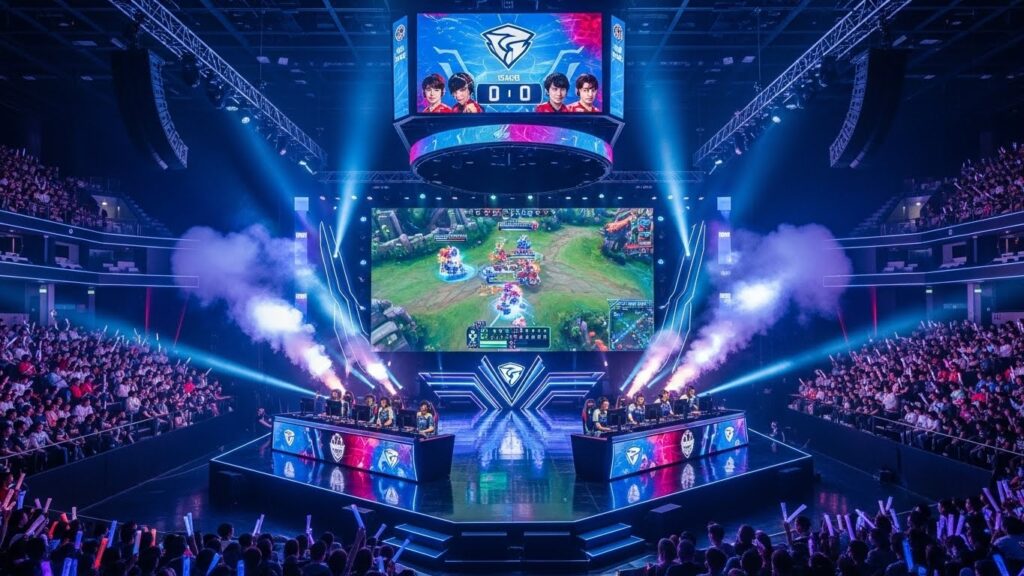

In the world of entertainment, few industries have seen as explosive a growth as esports. What started as a niche pastime for passionate gamers has transformed into a global phenomenon, rivaling traditional sports in viewership, investment, and cultural influence. Esports, or electronic sports, refers to competitive video gaming at a professional level, and over the last decade, it has evolved into a multi-billion-dollar industry. This blog delves into the rise of esports, its significance in modern culture, its economic impact, and what the future holds for competitive gaming.
The Birth of Esports: From Hobby to Profession
The history of esports dates back to the early days of video games. In the 1970s, arcade machines became the first platform for competitive gaming. While these early competitions were small and informal, they laid the groundwork for what would later become a global industry. Games like Pong and Space Invaders attracted the attention of gamers who sought to compete against one another, although the stakes were relatively low.
As technology advanced in the 1990s, online multiplayer gaming began to take off. With the advent of Local Area Networks (LAN) and high-speed internet, players could compete against each other from different locations. One of the first major tournaments was the Red Annihilation competition for the game Quake, which took place in 1997 and is considered one of the first true esports events. This competition attracted hundreds of players, culminating in a grand prize of a Ferrari, making it clear that esports had the potential to offer more than just bragging rights.
By the early 2000s, esports events began to take a more structured form. Global organizations like the World Cyber Games (WCG) and the Cyberathlete Professional League (CPL) established regular tournaments, and the audience for competitive gaming began to grow. Although still a relatively small community, the foundation for a professional esports scene had been laid.
The Explosion of Esports in the 2010s
The 2010s marked the beginning of esports’ meteoric rise into mainstream culture. Several factors contributed to this shift, but perhaps the most important was the advent of streaming platforms like Twitch. In 2011, Twitch was launched as a platform dedicated to live-streaming video games. It allowed gamers to broadcast their gameplay to a global audience, creating an interactive community that could watch, comment, and engage with their favorite players.
Twitch’s success helped esports grow exponentially, as tournaments and matches could now be broadcasted to millions of people around the world. Games like League of Legends, Dota 2, Counter-Strike: Global Offensive (CS:GO), and Overwatch became household names, drawing massive online audiences and creating a lucrative ecosystem for professional gamers, teams, and content creators.
Another key development was the explosion of esports prize pools. The International, Dota 2’s annual tournament, is perhaps the most notable example. In 2013, the prize pool for The International was a staggering $2.8 million, but by 2019, the prize pool had ballooned to over $30 million, the largest in esports history. This growth in prize money was made possible through crowdfunding, where fans contributed to the pot by purchasing in-game items. Such figures demonstrate how competitive gaming had evolved from a niche hobby to a multi-million-dollar industry, attracting sponsorships from major brands and corporations.
Esports as a Career Path: A New Age of Professional Gaming
The growth of esports in the 2010s also brought with it the emergence of professional gaming as a viable career. No longer just an activity for amateurs, competitive gaming became a full-time job for talented players. Esports athletes—often referred to as “pro gamers”—now sign contracts with professional organizations, compete in high-stakes tournaments, and earn substantial salaries from sponsorships, streaming, and merchandise sales.
Esports organizations like Team Liquid, Cloud9, FaZe Clan, and G2 Esports became some of the most recognized names in the industry. These teams sign players from around the world, offering them salaries, training facilities, coaches, and analysts to help them succeed. The life of a pro gamer is much like that of an athlete in traditional sports: training, strategy meetings, and intense practice sessions to stay at the top of their game.
While professional players are the most visible figures in the esports ecosystem, they are not alone. Coaches, analysts, and support staff play a crucial role in maintaining a team’s performance. Analysts break down gameplay footage, coaches devise strategies, and support staff help players manage their schedules and well-being. Together, this team creates the infrastructure needed for competitive gaming to flourish.
In addition to professional players, the rise of esports has also led to the growth of content creators. Many gamers who originally participated in esports tournaments later transitioned to streaming and content creation, building massive followings on platforms like Twitch and YouTube. These content creators often engage in livestreams, video uploads, and other forms of entertainment, generating income through ads, sponsorships, and fan donations.
The Impact of Esports on Global Culture
Esports has had a profound impact on global culture, influencing everything from entertainment to social interactions. Esports has created a new form of fandom, where players and teams have legions of devoted followers who engage through social media, fan clubs, and community events. Players like Faker from League of Legends and s1mple from CS:GO have become household names, adored by fans who closely follow their careers.
The rise of esports has also led to a merging of traditional sports and gaming. Major sports franchises have recognized the potential of esports and have begun investing in it. Teams from the NBA, NFL, and other traditional sports leagues now own esports franchises, further legitimizing competitive gaming as a mainstream sport. For example, the Philadelphia 76ers own an esports team, and many professional soccer clubs, like Paris Saint-Germain and Manchester City, have entered the esports scene by sponsoring gaming teams.
Another major impact of esports is the shift in how younger generations consume entertainment. Streaming platforms like Twitch have become cultural hubs where fans watch live gameplay, interact with streamers, and discuss their favorite games and players. Unlike traditional television, which relies on scheduled programming, platforms like Twitch allow viewers to watch content whenever they want, making it a more flexible and engaging way to consume entertainment.
Esports has also had a significant impact on the economy. In 2020, the global esports industry was valued at over $1 billion, and projections show it will continue to grow in the coming years. Major brands, such as Coca-Cola, Intel, and Mercedes-Benz, have invested heavily in the esports ecosystem, sponsoring tournaments, teams, and individual players. Esports has also led to the creation of new jobs, including broadcasting, event management, game development, and more.
The Challenges Facing Esports
While the growth of esports has been remarkable, it is not without its challenges. One of the biggest hurdles facing the industry is sustainability. While top-tier professional players can earn substantial salaries, the path to success in esports is difficult and highly competitive. Many players begin their careers in their teens and may face burnout or physical strain from the long hours of practice required to remain at the top of their game. Additionally, esports careers are often short-lived; many players “retire” by their mid-20s due to the intense pressure and the rapid pace at which new talent emerges.
Another challenge is the issue of toxicity in gaming communities. Online multiplayer games, particularly competitive ones, are often plagued by negative behavior, such as trolling, harassment, and cheating. These issues not only tarnish the reputation of esports but also drive away potential new players and fans. Organizations within the industry are increasingly taking steps to address these problems, implementing anti-cheating software, moderating online communities, and promoting positive player behavior.
The esports industry also faces a degree of skepticism from some traditional sports fans and media. While esports has grown in popularity, there are still those who view it as a “fad” or not as legitimate as traditional sports. As esports continues to develop, the challenge will be to bridge this divide and gain acceptance from a wider audience.
The Future of Esports: Beyond the Horizon
Looking ahead, the future of esports is incredibly promising. Technological advancements in virtual reality (VR), augmented reality (AR), and artificial intelligence (AI) could open up new possibilities for immersive, interactive gaming experiences. Esports could evolve from traditional gaming competitions into fully immersive experiences, where players and spectators alike can engage in a new level of interaction.
Esports is also likely to become more integrated into education. Colleges and universities around the world are already offering scholarships for esports athletes, and this trend is expected to continue. Esports degree programs, focusing on areas such as game design, broadcasting, and event management, are likely to become more common as the industry grows.
Another exciting development is the potential for esports to become part of the Olympic Games. While esports was not included in the 2020 Tokyo Olympics, the International Olympic Committee (IOC) has expressed interest in the idea of esports eventually being included in future Olympic events. This would further cement esports as a legitimate and recognized sport on the world stage.
In conclusion, esports has come a long way from its humble beginnings in arcade competitions. It has transformed into a global entertainment industry, offering new career opportunities, fostering global communities, and shaping the future of competitive gaming. While challenges remain, the future of esports is incredibly bright, and it will continue to captivate audiences around the world for years to come.