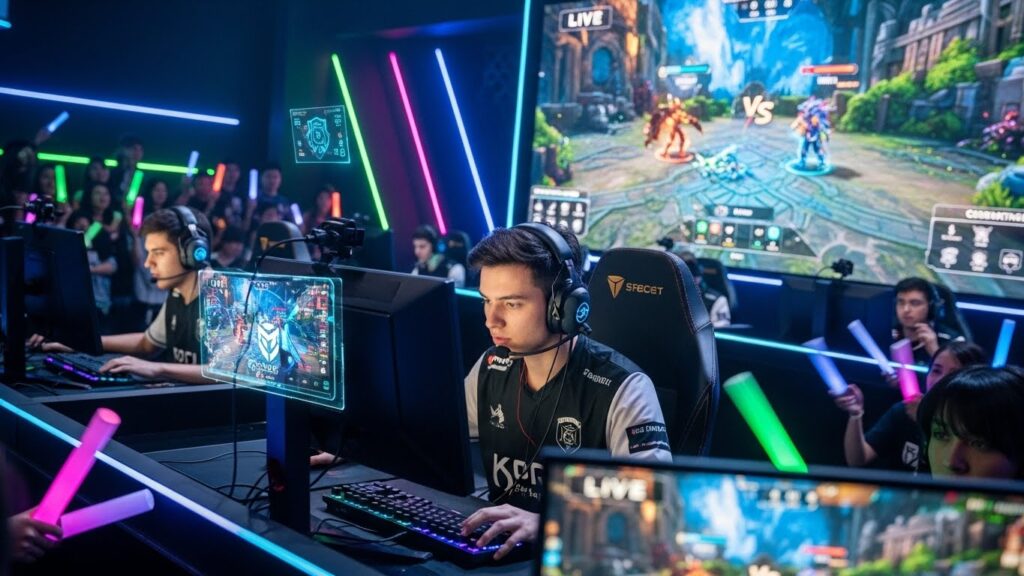

Esports, or electronic sports, is no longer just a niche interest. It has evolved into a global phenomenon, reshaping the way we view gaming, entertainment, and competition. The rapid growth of esports has transformed what was once a pastime into a billion-dollar industry. From casual gamers to professional athletes, esports is attracting a wide range of participants, sponsors, and fans. But how did it all begin, and what does the future hold for this exciting sector?
In this blog post, we will explore the journey of esports, its growing influence on traditional sports, the role of streaming platforms, and what makes this industry so appealing to millions around the globe.
What is Esports?
Esports refers to organized, multiplayer video game competitions, particularly between professional players, individually or as teams. These competitions are held at both local and international levels, with games ranging from strategy-based titles like League of Legends and Dota 2, to first-person shooters such as Counter-Strike: Global Offensive and Overwatch, and even sports simulation games like FIFA.
At its core, esports is about competitive gaming, where players compete for glory, skill, and prizes. Unlike casual gaming, esports is structured, and players train rigorously, just like athletes in traditional sports. With the rapid rise of esports in the last decade, it has become a multi-billion dollar industry, with sponsorships, merchandise, and advertising contributing to its growing revenue.
The Origins of Esports
Esports can trace its roots back to the 1970s and 1980s, when competitive gaming first emerged in the form of arcade tournaments. Games like Space Invaders and Pong were among the earliest titles to feature competitions. However, it wasn’t until the mid-90s that the first major esports events began to take shape, with tournaments like the Red Annihilation tournament for Quake becoming widely recognized.
By the late 1990s and early 2000s, the rise of the internet made it easier for players to connect from across the world. Games like StarCraft and Warcraft III began to dominate the competitive gaming scene, with major competitions held in South Korea. South Korea played a pivotal role in shaping esports into the global industry it is today, with the creation of dedicated gaming channels, such as MBCGame, which broadcast esports tournaments on national television.
The success of these early competitions set the stage for what would become an explosion of esports worldwide in the next two decades. With the advent of platforms like Twitch, YouTube Gaming, and dedicated esports leagues, the gaming world would change forever.
The Growth of Esports
In the past decade, esports has grown exponentially. According to recent reports, the global esports market is projected to exceed $1.6 billion by 2024, with revenues generated from sponsorships, advertising, media rights, ticket sales, and merchandise. This growth has been largely fueled by the increasing number of gamers, the rise of streaming platforms, and the increasing investment from both traditional sports organizations and tech companies.
Professionalization of Esports
A key factor behind the rapid growth of esports is the professionalization of the industry. Esports is no longer just for hobbyists; it has become a serious career path for many players. Professional esports teams and organizations have emerged, and top players are now earning salaries and prizes that rival those of traditional athletes.
Esports organizations like Team Liquid, Fnatic, Cloud9, and T1 have established themselves as major players in the competitive gaming world, recruiting the best players from around the globe and creating massive fanbases. These organizations provide not only a platform for players to compete but also the infrastructure for training, coaching, and sponsorship deals.
The Role of Streaming Platforms
Streaming platforms like Twitch, YouTube Gaming, and Facebook Gaming have been instrumental in popularizing esports. These platforms allow gamers to broadcast their gameplay to audiences around the world, turning casual streamers into full-fledged influencers.
Twitch, in particular, has become the dominant platform for esports broadcasts. It is not just a place for players to showcase their skills, but also a venue where fans can engage with their favorite players and teams in real-time. Esports tournaments and matches are often broadcast live on these platforms, allowing viewers to experience the excitement of competitive gaming from the comfort of their homes.
The interaction between streamers and their audience has also created a new form of entertainment. Fans are no longer passive viewers; they actively engage with streamers through live chats, donations, and even influencing the content creators’ decisions. This shift has helped foster a sense of community, making esports more accessible and relatable to the average viewer.
Esports and Traditional Sports
One of the most significant aspects of esports is its relationship with traditional sports. Initially, many viewed esports as a niche activity, only appealing to a small group of gamers. However, this perception has changed as esports has continued to gain mainstream recognition.
Investment by Traditional Sports Organizations
Major traditional sports leagues have begun to invest heavily in esports, seeing the potential for overlap with their fanbase and the opportunity for expanding their brand into the digital world. For example, organizations like the NBA, NFL, and Formula 1 have launched esports leagues or collaborated with existing esports entities. The NBA’s NBA 2K League, the NFL’s Madden Championship Series, and Formula 1’s F1 Esports Series are examples of how traditional sports are embracing the digital gaming world.
These partnerships have helped to legitimize esports, transforming it from a fringe activity into a mainstream event with mass appeal. Additionally, sports stars such as Michael Jordan, Shaquille O’Neal, and David Beckham have invested in esports organizations or entered the space in some way, further solidifying its place in the world of sports.
Esports as a Gateway to Traditional Sports Fans
Esports is also appealing to younger audiences who may not traditionally follow sports. For many, esports is the entry point into the world of competitive gaming and entertainment. With its fast-paced nature, high skill ceiling, and intense competition, esports attracts a similar level of excitement that traditional sports do. For example, games like League of Legends and Overwatch feature highly strategic gameplay, which can be compared to traditional team sports like football or basketball.
Esports also provides a level playing field in some ways, allowing anyone with a good internet connection to compete in global tournaments, unlike traditional sports that require physical prowess or access to expensive training facilities.
The Future of Esports
As the esports industry continues to grow, it is likely that we will see even greater investment, larger audiences, and increased mainstream recognition. The future of esports holds exciting possibilities, and we can expect the following trends to shape its trajectory:
Increased Media Exposure
Esports has already made its way into mainstream media, with major broadcasters like ESPN and TBS airing esports events. As more people become interested in gaming and esports, traditional sports broadcasters will likely invest further in esports coverage, broadcasting major tournaments and events across the globe.
Global Expansion
While esports is already huge in regions like North America, Europe, and Asia, its reach is growing in countries such as Brazil, India, and the Middle East. As infrastructure and access to high-speed internet improve globally, more countries will see esports emerge as a form of entertainment and competition.
Esports in Schools and Universities
Esports is increasingly becoming a fixture in schools and universities. Many institutions are establishing esports programs, scholarships, and dedicated gaming arenas, offering students a chance to pursue esports professionally or academically. This will only further legitimize esports as a viable career path for younger generations.
Virtual and Augmented Reality
Virtual reality (VR) and augmented reality (AR) are technologies that could dramatically change the way we experience esports. Imagine competing in a VR League of Legends or watching an AR Counter-Strike tournament where the game’s action overlaps with the real world. These technologies could create an even more immersive and interactive esports experience for players and fans alike.
Conclusion
Esports has come a long way from its humble beginnings in the 1970s and has transformed into a global juggernaut that is revolutionizing competitive gaming, entertainment, and sports. With its rapid growth, esports has not only gained mainstream recognition but has also started to shape the future of traditional sports.
As the industry continues to evolve, it will continue to captivate new audiences, create career opportunities, and innovate with new technologies. Esports is more than just a trend; it’s a cultural movement that is here to stay. Whether you’re a player, fan, or industry professional, the future of esports looks brighter than ever.