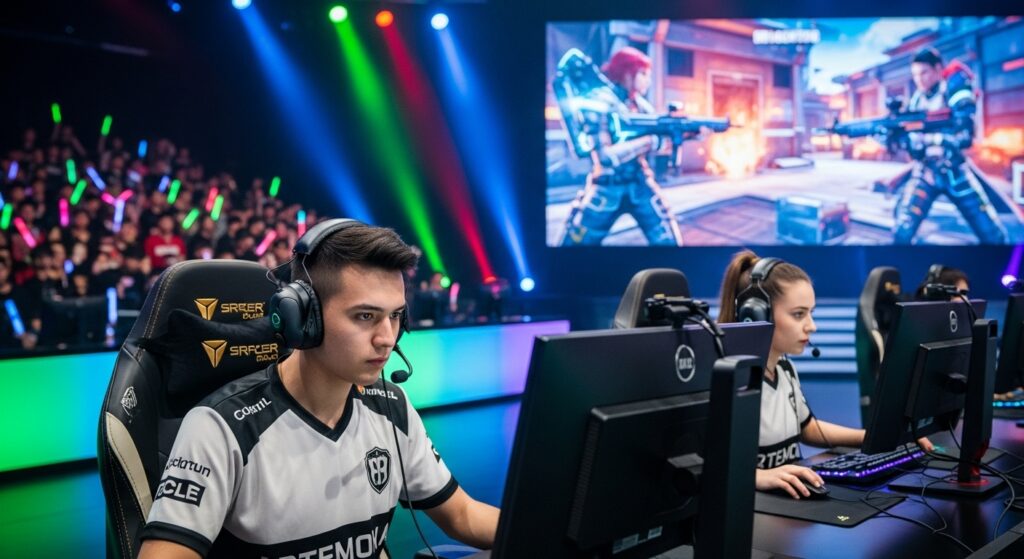

Digital Champions: How Esports is Redefining Competition and Culture
Introduction
Esports has grown from a niche hobby into a global phenomenon, captivating millions of players and fans around the world. Competitive gaming is no longer just about entertainment; it is a professional, highly strategic, and culturally influential industry. With professional leagues, international tournaments, and a thriving community, esports is reshaping how we think about competition, teamwork, and digital culture.
The Evolution of Esports
Esports began with small-scale competitions among dedicated gamers. Early tournaments were informal, often hosted in arcades or online forums. As technology improved, gaming became more accessible and competitive, giving rise to professional leagues and large-scale events. Today, esports attracts millions of viewers, offers substantial prize pools, and provides players with opportunities similar to traditional sports careers, demonstrating how far competitive gaming has come.
Life as a Professional Gamer
Professional esports players dedicate countless hours to perfecting their skills. Success requires quick reflexes, strategic thinking, teamwork, and mental endurance. Daily routines include intense practice sessions, analyzing gameplay footage, and coordinating with teammates. These athletes showcase discipline and dedication, proving that esports demands more than just casual play—it is a serious profession that requires constant growth and focus.
Technology at the Heart of Esports
Technology drives the esports experience, providing the tools necessary for competitive play and global connectivity. High-performance gaming systems, fast internet, and sophisticated software ensure seamless gameplay. Streaming platforms allow fans to watch tournaments in real time, while virtual reality and augmented reality are opening new doors for immersive experiences. Technology continues to shape the way players compete and fans engage with esports.
Community and Cultural Impact
Esports has created a vibrant global community. Players connect across borders, forming friendships, rivalries, and teams that share a common passion. Live events and online streaming foster social interaction and cultural exchange, turning gaming into a communal experience. Beyond competition, esports influences fashion, music, and digital trends, proving that it is not just a game but a cultural force.
Economic Growth and Opportunities
Esports has become a major economic driver. The industry generates revenue through sponsorships, advertising, merchandise, and media rights. Educational institutions now offer esports programs and scholarships, opening pathways for careers in coaching, content creation, and event management. This growth highlights the long-term potential of esports as a sustainable and influential sector of the digital economy.
The Future of Esports
The future of esports promises even greater innovation. Emerging technologies such as artificial intelligence, virtual reality, and cloud gaming will enhance gameplay and fan experiences. Global interest continues to expand, and competitive gaming will become increasingly professionalized and mainstream. Esports is poised to evolve into a fully recognized form of competition that combines entertainment, technology, and human skill like never before.
Conclusion
Esports is more than a form of entertainment—it is a cultural, social, and professional revolution. It unites players, inspires creativity, and challenges traditional ideas of competition. From grassroots tournaments to global championships, esports demonstrates the transformative power of digital gaming. As technology and audiences continue to grow, esports will remain at the forefront of modern entertainment, shaping the way we play, watch, and connect.