
Esports: The Digital Revolution of Competitive Gaming
Introduction
Esports, or electronic sports, has emerged as one of the most transformative cultural phenomena of the 21st century. What began as casual competitions between friends in basements and internet cafes has evolved into a global industry with professional players, international tournaments, and millions of passionate fans. The rise of esports is not just about gaming; it is about entertainment, technology, culture, and competition converging in unprecedented ways.
Today, esports is a billion-dollar industry that rivals traditional sports in terms of audience engagement and investment. Its growth has reshaped how people perceive gaming, turning what was once considered a pastime into a viable career path and a global entertainment platform. In this blog, we will explore the origins, evolution, and impact of esports, its professional ecosystem, global reach, challenges, and the exciting future that lies ahead.
The Origins of Competitive Gaming
Competitive gaming has roots that stretch back to the earliest days of video games. In the 1970s and 1980s, games like Pong and Space Invaders introduced simple competition. High score boards and local tournaments were the first instances where players could measure their skills against others. Arcades became social hubs where players honed their skills and competed for recognition, laying the foundation for organized competitions.
The 1990s brought a new level of complexity and competitiveness with the rise of multiplayer PC games. Titles such as Doom, Quake, and StarCraft allowed players to compete against each other in more strategic and dynamic environments. LAN parties became a crucial aspect of competitive gaming, providing the infrastructure and social interaction necessary for communities to grow.
South Korea played a pivotal role in professionalizing esports. With the immense popularity of StarCraft in the late 1990s, televised matches and formal leagues were established. Government and corporate support helped create a thriving esports culture, positioning the country as a global leader in competitive gaming. These early developments set the stage for esports to become an internationally recognized industry.
The Impact of Online Gaming and Streaming Platforms
The 2000s marked a turning point in esports with the advent of high-speed internet and online gaming. Players could now compete globally, breaking down geographic barriers and creating larger, more connected communities. Multiplayer games like Counter-Strike, World of Warcraft, and League of Legends attracted millions of players worldwide, each participating in ranked matches and online tournaments.
Streaming platforms revolutionized the way audiences engaged with esports. Platforms such as Twitch, YouTube Gaming, and later specialized services provided live coverage of matches, behind-the-scenes content, and direct interaction between players and fans. Streaming allowed professional players to build personal brands, connect with audiences, and generate revenue through subscriptions, donations, and sponsorships. It also gave rise to content creators who became celebrities in their own right, further popularizing esports and expanding its cultural influence.
Iconic Esports Titles and Their Influence
Certain games have become pillars of the esports ecosystem, shaping its growth and culture. League of Legends, developed by Riot Games, is one of the most prominent esports titles globally. Its annual World Championship draws millions of viewers and features multi-million-dollar prize pools. Dota 2, with its signature tournament The International, is known for offering some of the largest prize money in esports history.
First-person shooters, such as Counter-Strike: Global Offensive and Overwatch, have cultivated competitive communities and professional leagues. Fighting games like Street Fighter and Super Smash Bros. emphasize individual skill, precision, and strategy, while sports simulations like FIFA and NBA 2K bridge the gap between traditional sports fans and gamers.
These titles not only provide platforms for competition but also shape fan communities, streaming content, and sponsorship opportunities. Each game has unique mechanics and strategic depth, offering players and audiences distinct experiences within the esports landscape.
The Professionalization of Esports
Professional esports players are now recognized as athletes, requiring intense dedication, skill, and strategy. Top players often train for eight to twelve hours a day, reviewing gameplay footage, studying opponents, and refining techniques. Mental resilience, communication, and teamwork are as crucial as technical skill.
Professional players also serve as content creators and influencers, building global fanbases through streaming, social media, and brand endorsements. Iconic figures like Faker in League of Legends or N0tail in Dota 2 have transcended gaming, becoming cultural icons whose influence extends beyond esports.
Esports teams operate with organizational structures similar to traditional sports clubs. They employ coaches, analysts, nutritionists, and mental health specialists to optimize performance. Dedicated training facilities, ergonomic setups, and structured practice schedules demonstrate that esports is not a casual hobby but a rigorous professional endeavor.
Esports Tournaments: The Spectacle of Competition
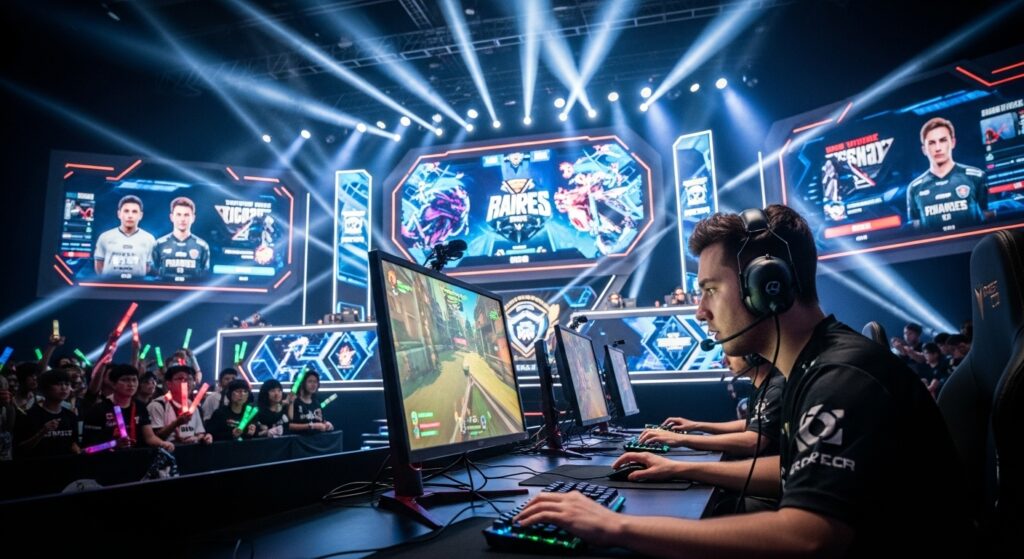
Esports tournaments have grown into large-scale global events. International competitions like the League of Legends World Championship, Dota 2’s The International, and the Fortnite World Cup draw live audiences in stadiums and millions of viewers online. Production quality rivals that of traditional sports, with cinematic intros, expert commentary, and interactive viewer engagement.
Prize pools for these events have reached record-breaking levels. Dota 2’s The International has offered over thirty million dollars in prize money, reflecting the scale and stakes of modern esports competitions. Beyond financial rewards, these tournaments generate revenue through sponsorships, broadcasting rights, and merchandising. The tournaments themselves are cultural events, attracting attention from mainstream media and solidifying esports as a legitimate global entertainment phenomenon.
Sponsorships and Commercialization
Sponsorships are a driving force behind esports’ economic growth. Companies from technology, energy drinks, apparel, and automotive industries invest heavily in teams, events, and content creators. These partnerships provide financial stability for organizations and access to highly engaged audiences, primarily younger demographics.
Integrated marketing strategies in esports include product placements, co-branded content, and interactive campaigns. Unlike traditional advertising, esports sponsorship engages audiences through authentic interactions with players and teams. This model has proven highly effective, creating long-term brand loyalty and enabling organizations to thrive financially while investing in talent and infrastructure.
Global Reach and Regional Impact
Esports is a truly global phenomenon, with professional leagues, tournaments, and fan communities spanning continents. South Korea and China are recognized as esports powerhouses due to their early investment in infrastructure and a strong cultural embrace of competitive gaming. North America and Europe host major professional leagues and tournaments, while emerging markets in Southeast Asia, Latin America, and the Middle East are rapidly expanding.
The globalization of esports has introduced diverse playstyles and strategic approaches. Regional differences in gameplay, tactics, and team culture create dynamic international competitions. These tournaments not only showcase skill but also serve as platforms for cultural exchange, reinforcing the universal appeal of competitive gaming.
Esports in Education and Skill Development
Esports has also found a place in education. Universities and schools offer scholarships for esports athletes and provide structured programs that teach game design, management, marketing, and other industry-relevant skills. Collegiate esports programs promote teamwork, strategic thinking, and communication, equipping students with transferable skills applicable beyond gaming.
Esports encourages critical thinking, discipline, and problem-solving. It provides a framework for young players to develop professionally while pursuing their passion, demonstrating that competitive gaming can be both educational and career-oriented.
Mental and Physical Demands of Esports
Professional esports requires significant mental and physical effort. Players must manage stress, maintain focus, and make rapid decisions under pressure. Long hours of training can lead to fatigue, repetitive strain injuries, and burnout if not properly managed.
To address these challenges, esports organizations now employ mental coaches, physical trainers, and nutrition experts. Structured schedules, ergonomic setups, and mindfulness practices help players maintain peak performance. Recognizing the demands of esports as comparable to traditional sports has elevated its legitimacy and underscored the importance of holistic player care.
The Role of Streaming and Community Engagement
Streaming platforms are central to esports culture. They allow fans to watch live competitions, learn strategies, and interact with players in real time. Community engagement strengthens the connection between players and audiences, fostering loyalty and participation.
Many professional players supplement income through streaming, offering tutorials, behind-the-scenes content, and entertainment. Developers and organizers use community feedback to improve games and tournaments, creating a feedback loop that keeps the esports ecosystem dynamic and responsive.
Challenges Facing the Esports Industry
Despite its growth, esports faces challenges. Rapid expansion has led to issues in regulation, contract fairness, and labor rights. Gender representation remains uneven, with female and minority players often underrepresented in professional leagues.
Integrity issues, including cheating and match-fixing, threaten competitive fairness. Anti-cheat systems, regulation, and community education are essential to preserving trust. Sustainability is also a concern, as tournaments, online servers, and streaming infrastructure consume significant resources. Balancing growth with ethical practices and long-term viability is critical for the industry’s future.
Technological Advancements and the Future of Esports
The future of esports will be shaped by emerging technologies such as virtual reality, augmented reality, and artificial intelligence. VR esports could allow fully immersive competitions, while AI can assist in training, analytics, and matchmaking. Mobile gaming continues to expand the global audience, enabling participation and viewership in regions previously untapped.
Inclusivity and diversity initiatives are fostering broader participation, creating a richer and more representative competitive environment. Esports is also likely to integrate further with traditional sports, entertainment, and media industries, creating hybrid forms of competition and engagement.
The potential for global expansion, innovation, and community growth ensures that esports will remain at the forefront of digital entertainment for years to come.
Conclusion
Esports has evolved from humble beginnings into a global industry that combines competition, entertainment, and technology. It provides professional opportunities, builds global communities, and offers a unique form of cultural expression. From early arcade competitions to international tournaments and streaming platforms, esports reflects human creativity, passion, and innovation.
As the industry continues to expand, esports will play an increasingly important role in shaping modern culture. Its combination of skill, strategy, community, and entertainment ensures that competitive gaming will remain a defining feature of the digital era, inspiring millions worldwide and setting the stage for a future where gaming and culture are inseparable.