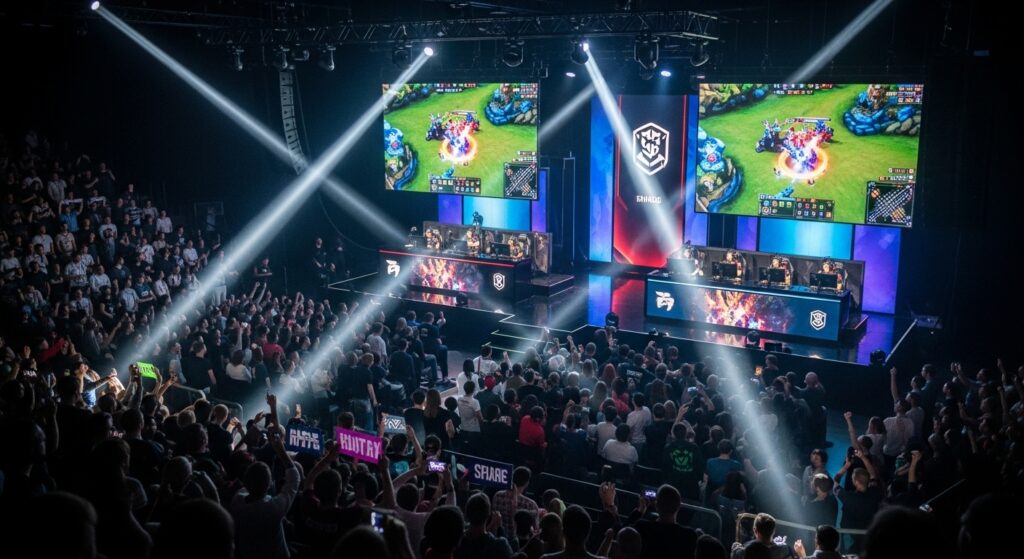

Esports: The Digital Revolution Shaping a New Era in Entertainment
Esports, a term that once referred to competitive gaming played by a niche group of passionate individuals, has transformed into a worldwide phenomenon, reshaping the entertainment industry in ways never imagined. What was once viewed as a pastime for a select few has evolved into a global, multi-billion-dollar industry, attracting millions of viewers, lucrative sponsorships, and an ever-growing ecosystem that connects players, fans, and creators across the globe. Esports is no longer just about gaming—it’s about culture, community, and competition on a massive scale.
In this blog post, we’ll take a deep dive into the world of esports, exploring its origins, growth, key players, impact on traditional sports, and the exciting future that awaits this rapidly expanding sector.
The Birth of Esports: From Arcades to Competitive Gaming
The roots of esports can be traced back to the early days of video gaming. In the late 1970s and early 1980s, the first arcade games like Space Invaders and Pong introduced the idea of competitive play, where players could go head-to-head for the best scores. These games, though rudimentary by today’s standards, were the first sparks of competitive gaming, bringing together players in a shared space, even if it was just a local arcade.
As the gaming industry grew, so did the desire to compete. By the late 1990s and early 2000s, the advent of the personal computer and the rise of the internet paved the way for a more structured form of competitive gaming. Online multiplayer games like Quake and StarCraft allowed players from around the world to compete against each other, setting the stage for esports as we know it today.
The early tournaments were small-scale, often held in physical venues, with players competing in local LAN (Local Area Network) parties. These early competitions, though modest, began to shape the structure of what would eventually become a global esports scene. It wasn’t until the 2000s, with the launch of games like Counter-Strike and Warcraft III, that competitive gaming gained serious momentum.
The Rise of Major Games: Turning Hobbyists into Pros
The 2010s marked the true explosion of esports, driven by the rise of multiplayer online battle arenas (MOBAs), first-person shooters (FPS), and battle royale games. Titles such as League of Legends, Dota 2, Counter-Strike: Global Offensive, and later Fortnite, became the backbone of esports competitions. These games offered dynamic, team-based gameplay with high skill ceilings, providing ample opportunities for players to showcase their talents in front of large audiences.
In particular, League of Legends, developed by Riot Games, became a cornerstone of the esports industry. Its World Championship, known as Worlds, has become one of the largest annual esports events in the world, attracting millions of viewers and offering multimillion-dollar prize pools. The International, the premier tournament for Dota 2, has similarly grown in prominence, offering prize money that eclipses those of traditional sports events like the Super Bowl.
The popularity of these games set off a chain reaction within the gaming industry. Game developers recognized the potential of creating esports ecosystems around their titles. Riot Games, Blizzard, Valve, and others began to structure their games around competitive play, with regular tournaments, organized leagues, and official rankings. The role of esports teams and organizations also became more formalized, with professional players signing contracts, receiving sponsorships, and even participating in training camps, much like traditional athletes.
The Business of Esports: Sponsors, Investors, and Media Partnerships
Esports has grown far beyond grassroots gaming communities into a massive, multifaceted industry with substantial financial backing. One of the key drivers behind this expansion has been the influx of sponsors and investors. Major global brands such as Coca-Cola, Intel, Nike, and Mercedes-Benz have jumped on the esports bandwagon, recognizing the potential of reaching a young, tech-savvy audience.
Sponsorships have become one of the largest sources of revenue for esports tournaments and teams. These deals range from product placements in streams and tournaments to full-blown partnerships that fund teams, events, and even the creation of branded content. For instance, Red Bull has not only sponsored players and events but has also taken a proactive role in shaping the esports community by creating its own tournaments and producing original esports content.
Esports investors, including venture capitalists and large media companies, have poured billions of dollars into the industry. In 2021, the esports industry was valued at around $1.08 billion, and that number is only expected to rise in the coming years. Streaming platforms, like Twitch and YouTube, have also played a critical role in driving esports’ growth. These platforms have turned esports into an entertainment medium akin to traditional sports, with millions of viewers tuning in to watch live streams, commentary, and highlights.
Even traditional sports leagues like the NBA and NFL have recognized the potential of esports, with organizations launching their own esports leagues, such as the NBA 2K League. These partnerships demonstrate that esports is no longer seen as a niche activity but as a legitimate and lucrative business that continues to evolve and attract mainstream attention.
Esports as a Global Cultural Movement
One of the most remarkable aspects of esports is its ability to create a global community. Thanks to the internet, players and fans from different countries can come together to share their passion for the games. Unlike traditional sports, where physical borders often limit participation, esports has been able to thrive in a truly globalized environment.
Esports has also spawned a new form of entertainment that is highly interactive. Fans engage with players, teams, and tournament organizers through social media, live chats, and online forums. Players themselves have become celebrities, amassing large followings on platforms like Twitch, YouTube, and Twitter. These influencers not only play the games but also create content that resonates with their fans, whether it’s educational streams, comedic skits, or behind-the-scenes looks at their lives.
Another unique feature of esports is its integration with other forms of entertainment. Music, fashion, and technology have all been intertwined with the growth of esports. Artists like Imagine Dragons and The Glitch Mob have performed at major esports events, and esports players and teams often collaborate with clothing brands, launching exclusive merchandise lines. This convergence of industries is a testament to how esports has become a cultural movement that extends beyond the realm of gaming.
The Changing Nature of Esports Careers
For aspiring gamers, esports now represents a viable career path. Gone are the days when being a “professional gamer” was seen as a pipe dream. Today, many esports athletes make a living through tournament winnings, sponsorship deals, and streaming. Top-tier players in games like League of Legends and Dota 2 can earn millions of dollars in prize money alone, not to mention their salaries from organizations and endorsement deals.
However, the life of an esports player is far from easy. The pressure to perform at the highest level is intense, and the competition is fierce. Players must train for hours every day, analyzing gameplay, studying opponents, and refining their strategies. Many players experience burnout or injuries due to the physical and mental demands of the profession. Esports organizations are increasingly offering support structures for their players, including physical trainers, mental health professionals, and coaches to ensure long-term success.
Beyond the players, careers in esports have expanded to include roles in management, content creation, broadcasting, and event organization. As the industry grows, the opportunities for employment in esports continue to multiply. Whether it’s a career as a shoutcaster (the esports equivalent of a sports commentator), a social media manager, or a game developer, esports offers a broad range of opportunities for individuals with diverse skills and interests.
Esports and Traditional Sports: A Symbiotic Relationship
In many ways, esports is complementary to traditional sports. While esports is still often seen as distinct from traditional athletics, the lines between the two continue to blur. Esports is drawing attention from major sports franchises, athletes, and media companies, and there’s growing recognition of the parallels between the two industries.
In fact, some traditional sports leagues have started to embrace esports, particularly in terms of integrating gaming experiences into their branding. The NFL, for example, has partnered with EA Sports to create esports versions of its popular football video games, allowing fans to compete in virtual versions of the sport. Similarly, the FIFA video game series has long had its own professional esports scene, with players from around the world vying for the title of World Champion.
Moreover, the skills required for success in esports—strategy, teamwork, reflexes, and mental agility—are strikingly similar to those required in traditional sports. The idea of esports as a legitimate form of competition has become more accepted, and many top-level athletes view gaming as a valuable mental exercise, helping them hone skills that can translate to their physical pursuits.
The Future of Esports: Endless Possibilities
Looking ahead, the future of esports seems bright. The continued integration of new technologies such as virtual reality (VR) and augmented reality (AR) could take the esports experience to new heights, providing more immersive and interactive experiences for players and fans alike. VR and AR could offer fans a chance to feel as though they’re sitting in the front row of a live event, even if they’re on the other side of the world.
In addition to technological advancements, the growing role of esports in education is another promising trend. Many universities are now offering scholarships and degrees in esports management, marketing, and game development, further legitimizing esports as a career path. High school and collegiate esports leagues are also gaining traction, providing a structured environment for young gamers to develop their skills and possibly pursue professional careers.