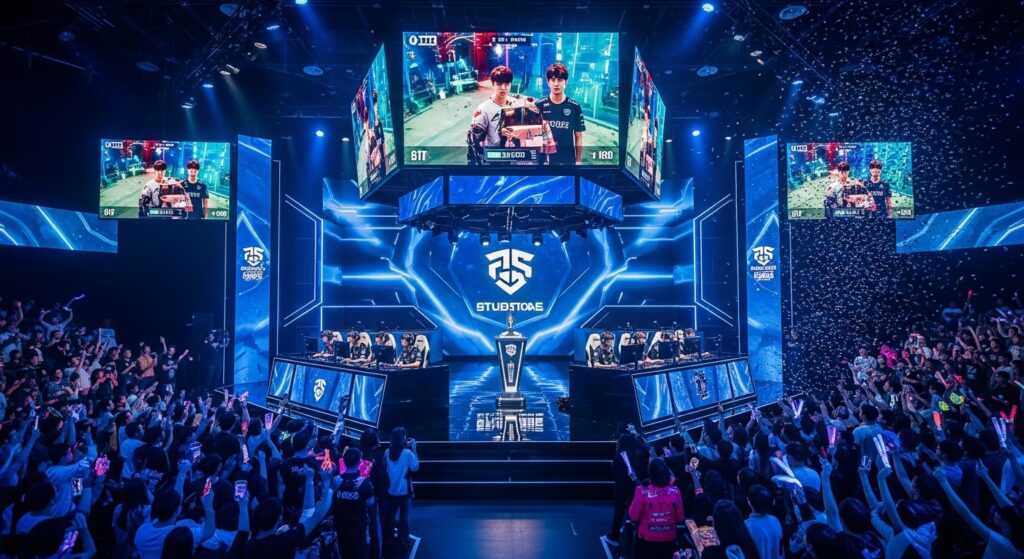

Introduction: Esports’ Meteoric Rise to Fame
Esports, the competitive world of video gaming, has rapidly transformed from a niche hobby into a global powerhouse. Once considered a pastime for geeks and gamers, esports has now become one of the most lucrative and culturally significant forms of entertainment worldwide. What was once confined to local tournaments and basement competitions is now a multi-billion-dollar industry with millions of fans, professional players, and corporate sponsors. Esports has disrupted the traditional sports industry, offering a fresh perspective on competition, skill, and entertainment.
The journey from humble beginnings to global recognition is a fascinating one, and its continued growth shows no signs of slowing down. Today, esports spans multiple gaming genres, from first-person shooters (FPS) like “Counter-Strike” and “Overwatch” to multiplayer online battle arenas (MOBAs) like “League of Legends” and “Dota 2.” The world of esports is a dynamic and multifaceted landscape that blends gaming with professional sports, entertainment, and technology.
The Birth of Esports: From Casual Play to Competitive Showdowns
The origins of esports can be traced back to the early days of video gaming. In the 1970s and 1980s, video games were mostly a recreational activity played casually by individuals or small groups. However, the concept of competition began to take shape with the rise of arcade games. Titles like “Pong” and “Space Invaders” allowed players to compete for high scores, and even those small competitions gave birth to the idea of competitive gaming.
In the 1990s, the advent of online multiplayer games marked a pivotal moment in the evolution of esports. With the launch of games like “Quake” and “StarCraft,” players could now challenge each other in real-time, across the globe. These games created a new culture of online competition and community that would lay the groundwork for organized esports.
By the early 2000s, esports was starting to take a more structured form, with professional tournaments and leagues emerging, particularly in countries like South Korea, where “StarCraft” was a national obsession. The World Cyber Games (WCG), founded in 2000, is often credited as one of the first major international esports tournaments. It was an event that showcased the potential of esports on a global scale. The success of games like “Warcraft III” and “Counter-Strike” in these tournaments set the stage for the professionalization of gaming.
The Growth of Professional Esports: Turning Passion into a Career
The 2010s marked the rise of esports as a fully professional industry. No longer just a hobby, esports became a viable career option for talented gamers. Teams were formed, sponsorship deals were struck, and major tournaments were broadcasted to millions of viewers across the world. This growth was propelled by the increasing popularity of online streaming platforms such as Twitch and YouTube Gaming, where professional players could showcase their skills in front of live audiences.
One of the key moments in the professionalization of esports was the establishment of franchise leagues. These leagues, modeled after traditional sports leagues, introduced a new level of structure to competitive gaming. Leagues such as the League of Legends Championship Series (LCS), Overwatch League (OWL), and Call of Duty League (CDL) brought stability, investment, and long-term career opportunities for players. In these leagues, players were signed to teams that paid them salaries and allowed them to compete in high-stakes, regularly scheduled matches.
In addition to league-based competitions, major events like “The International” (Dota 2’s annual championship) and the “League of Legends World Championship” have become global spectacles, drawing millions of viewers and offering massive prize pools. The rise of esports has given rise to a new generation of professional athletes who train rigorously, just like traditional sports players. Esports organizations have now become multi-million-dollar businesses, with sponsorships from global brands such as Coca-Cola, Intel, and Red Bull.
The Global Appeal of Esports: Reaching Mass Audiences
Esports’ reach has expanded far beyond the confines of the gaming community. Today, esports has become a mainstream form of entertainment, attracting audiences from diverse backgrounds and interests. With major tournaments airing live on television and streaming platforms, esports events have become part of the global entertainment landscape. In 2020, it was estimated that the global esports audience exceeded 450 million, and this number continues to grow.
The ability to watch esports tournaments live has helped bridge the gap between gamers and fans who are not active players themselves. Platforms like Twitch, YouTube Gaming, and Facebook Gaming have created a direct line of communication between players and their followers. Fans can engage with their favorite players and teams in real-time through live chat, social media, and interactive streams. This level of engagement has made esports one of the most interactive forms of entertainment.
One of the unique aspects of esports is its accessibility. Unlike traditional sports, where fans must attend events in person to see their favorite teams, esports events can be watched from anywhere in the world via streaming services. Viewers can tune in to watch matches, follow commentary, and even participate in discussions. This accessibility has contributed to the rapid growth of esports’ fanbase, with millions of viewers tuning in to watch major events.
The Economic Impact of Esports: A Multi-Billion Dollar Industry
Esports has become a driving force in the global economy. The esports industry is valued at over $1 billion, with projections indicating it could exceed $3 billion by the end of the decade. Revenue streams for esports are diverse, including sponsorship deals, broadcasting rights, ticket sales, merchandise, and advertising. Global brands, from tech giants like Samsung and Alienware to fast-food chains like McDonald’s, are investing in esports sponsorships, eager to tap into its massive and engaged audience.
One of the most significant sources of revenue in esports is sponsorship. Brands understand that esports fans represent a young, tech-savvy demographic that is highly engaged with digital content. As a result, esports teams, tournaments, and players are attracting sponsorships worth millions of dollars. For example, the “League of Legends” World Championship generates significant revenue through both sponsorships and the sale of in-game items. Additionally, esports teams often wear jerseys emblazoned with logos of major brands, creating brand visibility for companies.
The increasing media rights for esports tournaments are another key revenue driver. Broadcasting agreements between esports organizations and streaming platforms allow millions of viewers to watch high-stakes competitions. These rights have become more lucrative as the popularity of esports has surged. In the case of major tournaments like “The International,” the prize pool is funded in part by crowdfunding, with fans contributing money to increase the total prize pool through in-game purchases.
The Role of Technology in Esports
Technology is the backbone of the esports industry. Without advances in gaming hardware, internet infrastructure, and streaming platforms, esports as we know it would not exist. The evolution of gaming PCs, consoles, and mobile devices has allowed players to engage in esports at the highest level. The need for high-performance equipment has also led to the development of professional-grade peripherals such as gaming keyboards, mice, and headsets, all of which contribute to the gameplay experience.
In addition, the rise of virtual reality (VR) and augmented reality (AR) is beginning to make its mark on esports. These technologies allow for more immersive gameplay and viewing experiences. VR could revolutionize esports by creating virtual arenas where players can compete in fully interactive environments, while AR could enhance the live viewing experience with real-time data overlays and dynamic audience engagement.
Cloud gaming is also expected to have a profound impact on the future of esports. By enabling players to access high-quality games on any device without the need for expensive hardware, cloud gaming can democratize access to competitive gaming. This could expand the talent pool and create new opportunities for aspiring esports athletes.
The Future of Esports: Expansion and Integration
As esports continues to grow, its future looks bright. The future of esports is not just about larger tournaments and higher prize pools; it’s about the integration of esports into mainstream culture. Many believe that esports will eventually be included in traditional sports events, such as the Olympics. While there are still hurdles to overcome, the growing acceptance of esports as a legitimate competitive sport suggests that it may soon be recognized on the same level as traditional sports.
In addition, the rise of college esports leagues and scholarships is helping to further legitimize esports as a career path. Universities and colleges are investing in esports programs, creating opportunities for students to develop their skills and potentially turn professional.
The growing convergence between traditional sports and esports is also evident. Sports organizations are increasingly investing in esports teams and tournaments. Major football clubs like Paris Saint-Germain and Manchester City have launched their own esports divisions, while basketball organizations like the NBA have introduced esports leagues based on their real-world counterparts. This cross-pollination between esports and traditional sports is helping to normalize esports in mainstream media.
Conclusion: The Enduring Power of Esports
Esports is more than just a passing trend; it’s a cultural shift that is changing the way we think about competition, entertainment, and sports. From its humble beginnings in arcades to its current status as a global industry, esports has proven that it is here to stay. With its growing fanbase, rising revenues, and ever-evolving technologies, esports is set to continue its expansion and redefine the future of competitive entertainment. Whether you’re a player, a fan, or a sponsor, the world of esports offers endless opportunities, excitement, and innovation. It’s no longer just about playing games—it’s about creating a global spectacle that connects millions of people from every corner of the globe.