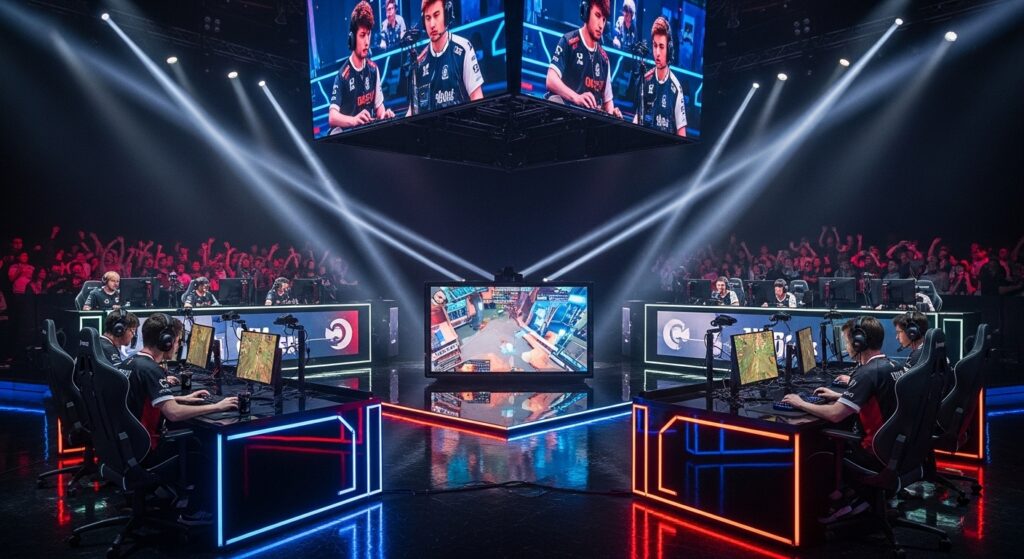

Esports Unleashed: How Competitive Gaming is Redefining Entertainment
Introduction: The Digital Revolution of Competition
In the last two decades, a new form of competition has emerged that is challenging traditional ideas of sports, entertainment, and professional careers. This is esports, or competitive gaming, a phenomenon that has grown from niche communities into a global industry generating billions of dollars annually. What began as small gatherings of passionate gamers has transformed into massive events attracting millions of viewers, professional teams, and worldwide sponsorships.
Esports is now more than just playing video games; it is a highly organized and commercialized arena where players train rigorously, strategists analyze every move, and fans engage with the sport like never before. This blog explores the rise of esports, the ecosystem that supports it, its cultural significance, the economic impact, challenges it faces, and what the future might hold.
The Early Days: From Arcades to Online Competitions
Competitive gaming has its roots in the 1970s and 1980s when arcade games and early home consoles became widely available. The first notable esports event occurred in 1972 at Stanford University, where students competed in Spacewar! for a subscription to Rolling Stone magazine. This small-scale competition laid the foundation for the idea of organized gaming tournaments.
In the 1980s, arcade championships such as the Space Invaders Championship attracted thousands of participants and spectators. These events, though modest, showcased the competitive spirit of gaming. The 1990s introduced online multiplayer games, enabling players to compete from different locations. Games like StarCraft, Counter-Strike, and Warcraft III were instrumental in popularizing esports, particularly in South Korea, which developed the first professional gaming leagues and dedicated esports stadiums.
By the early 2000s, esports began to take shape as a professional industry. Televised tournaments and organized leagues provided structure, credibility, and financial incentives for players. What once was a hobby became a potential career path, setting the stage for the global esports industry we see today.
The Modern Esports Ecosystem
Today, esports is a complex ecosystem with multiple stakeholders. At the center are professional players, who often train 8 to 12 hours a day, mirroring the commitment of traditional athletes. Their performance depends on strategy, reflexes, teamwork, and mental resilience. Teams provide coaching, nutrition plans, psychological support, and tactical analysis to maximize performance.
Major esports titles span various genres. Multiplayer online battle arena (MOBA) games like League of Legends and Dota 2 focus on teamwork and strategy. First-person shooters (FPS) such as Counter-Strike: Global Offensive and Valorant emphasize precision, reflexes, and coordination. Real-time strategy games like StarCraft II test critical thinking and resource management. Sports simulations such as FIFA and NBA 2K replicate real-world sports with a digital twist. Fighting games, including Street Fighter and Tekken, highlight individual skill and competitive intensity.
Streaming platforms have become a critical part of esports. Services like Twitch, YouTube Gaming, and other live platforms allow players to broadcast gameplay, interact with fans, and monetize their presence. This has created new career opportunities for streamers and content creators, blurring the line between competitive gaming and entertainment.
Global Popularity and Cultural Impact
Esports has rapidly grown into a global phenomenon, with millions of viewers watching tournaments online and in arenas. Major events like the League of Legends World Championship or The International for Dota 2 draw audiences comparable to traditional sports events, often exceeding tens of millions of viewers.
The cultural impact of esports is profound. Gaming is now seen as a legitimate pastime and career path. Universities offer esports scholarships, high schools form competitive teams, and professional leagues are recognized at governmental levels in some countries. Esports has also fostered a sense of community and inclusivity, bringing together players and fans from diverse backgrounds and regions.
Moreover, esports has influenced mainstream media and advertising. Major brands now sponsor teams, tournaments, and content creators, reaching audiences that are highly engaged and digitally native. The phenomenon has reshaped how entertainment is consumed, offering interactive experiences that traditional sports cannot match.
Economic Growth and Revenue Streams
Esports is now a major economic force. Global revenue from esports is expected to reach billions annually, driven by advertising, sponsorships, ticket sales, merchandise, and media rights. Prize pools for tournaments can reach millions of dollars, attracting elite players and adding legitimacy to the industry.
Team organizations operate like professional sports franchises, recruiting top talent, investing in training facilities, and marketing their brands. Major corporations have recognized the marketing potential of esports, sponsoring events and players to reach a young, tech-savvy audience.
Streaming and content creation also provide significant revenue opportunities. Platforms allow gamers to monetize through subscriptions, donations, and advertisements, enabling successful streamers to earn substantial income while building personal brands. Esports has therefore created an ecosystem where multiple career paths exist, not only for players but also for analysts, commentators, coaches, marketers, and event organizers.
Challenges and Controversies
Despite its success, esports faces several challenges. Player burnout is a common concern, as professional gamers often endure long hours of training with high pressure to perform. This can lead to physical strain, mental health issues, and reduced career longevity. Organizations are increasingly implementing wellness programs, emphasizing rest, nutrition, and psychological support.
Cheating, match-fixing, and doping remain challenges in esports. Maintaining fairness and integrity is crucial to sustain credibility and fan trust. Anti-cheating software, tournament regulations, and ethical standards are gradually being implemented, but the industry must remain vigilant.
Accessibility is another hurdle. High-end gaming hardware, stable internet connections, and training environments are not available to everyone, limiting diversity and inclusion in professional esports. Expanding access is essential to ensure the growth of esports on a truly global scale.
Esports as a Career Path
Esports is no longer a hobby; it is a legitimate career opportunity. Professional players can earn substantial salaries, sponsorships, and tournament winnings. However, careers in esports extend beyond playing competitively. Coaches, analysts, commentators, and content creators play vital roles in the industry.
Educational institutions are responding by offering courses in esports management, marketing, and game development. These programs provide the knowledge and skills needed for professional opportunities within the industry. Moreover, the remote and digital nature of esports allows people to work and collaborate globally, broadening the talent pool and expanding career possibilities.
Technological Advancements Shaping the Future
Technology has been a driving force behind the growth of esports. High-speed internet, powerful computers, immersive peripherals, and advanced graphics enhance both player performance and viewer experience. Virtual reality and augmented reality are beginning to influence gaming, creating new formats and interactive experiences for audiences.
Data analytics is also becoming central to esports strategy. Teams use sophisticated software to analyze player performance, study opponents, and develop tactical advantages. This approach mirrors traditional sports analytics, highlighting esports as a serious and strategic form of competition.
The Future of Esports
The future of esports is promising. As technology continues to advance, esports will become even more immersive, accessible, and inclusive. Cloud gaming, VR, and AR could redefine competition and audience interaction, enabling players to compete from anywhere in the world without high-end equipment.
Collaboration with traditional sports organizations could further elevate esports’ visibility. Already, several professional sports teams have entered the esports industry, creating dedicated divisions and sponsoring players. The integration of esports into mainstream culture will likely continue, with potential inclusion in major international sporting events.
Esports will also continue to foster innovation in entertainment and digital media. Interactive experiences, virtual fan engagement, and cross-platform tournaments will attract new audiences and push the boundaries of how competitions are organized and consumed.
Conclusion: Beyond Gaming
Esports has evolved far beyond casual gaming. It is a global industry, a cultural phenomenon, and a legitimate career pathway. From small college tournaments to stadiums filled with tens of thousands of cheering fans, esports demonstrates the power of technology and human ingenuity to redefine competition.
As the industry continues to grow, esports will inspire new generations of gamers, content creators, and entrepreneurs. Its influence on entertainment, culture, and technology is undeniable, and it is poised to remain a driving force in the digital age. For players, fans, and industry professionals, esports is more than a game; it is a transformative movement shaping the future of competition, communication, and entertainment.