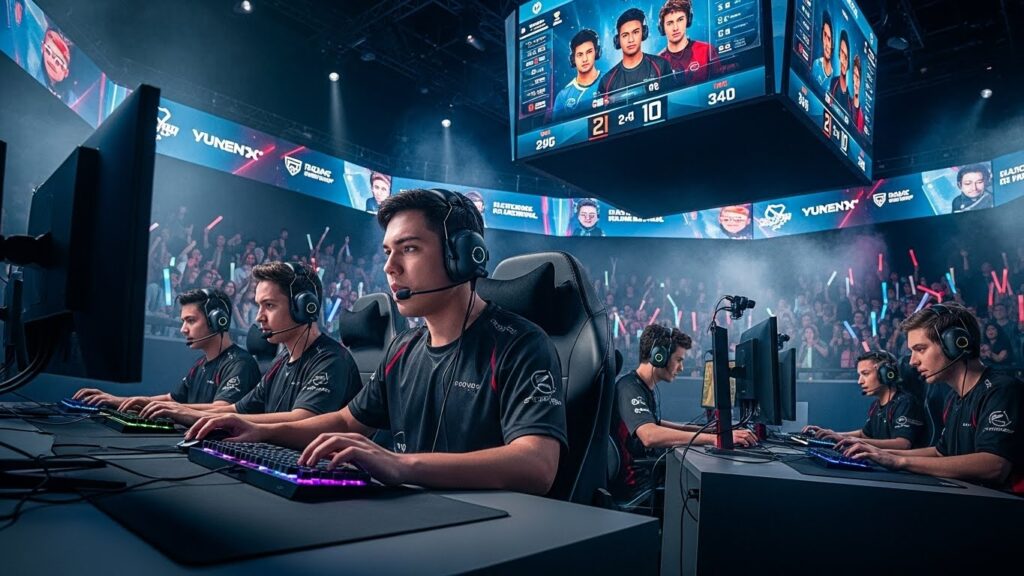

Introduction: The Digital Arena
Esports, once considered a niche hobby, has grown into a global phenomenon, captivating millions of players and fans worldwide. What started as casual video game competitions in basements and small tournaments has evolved into a professional, highly competitive industry. Today, esports is not just about gaming; it is about strategy, teamwork, mental agility, and entertainment. With professional leagues, massive prize pools, sponsorship deals, and international tournaments, esports is redefining the concept of competition in the digital age. Its influence reaches far beyond the screen, shaping careers, communities, and culture in ways few could have imagined a decade ago.
The Evolution of Competitive Gaming
The roots of esports can be traced back to the arcade era, where games like Space Invaders and Pac-Man sparked early competitive play. With the rise of personal computers in the 1990s, online multiplayer games such as StarCraft, Counter-Strike, and Warcraft laid the foundation for modern esports. These games required strategy, teamwork, and quick reflexes, skills that remain central to competitive gaming today. As the internet became more accessible, global competitions became feasible, allowing players from different countries to compete in real-time. Over the years, esports has expanded across genres, including first-person shooters, real-time strategy, sports simulations, battle royale, and fighting games, each fostering its own professional leagues and fan base.
Economic Growth and Industry Impact
Esports has transformed into a billion-dollar industry, attracting investment from major corporations, media networks, and technology companies. Revenue streams include sponsorships, advertising, merchandise sales, ticketed events, and streaming subscriptions. Global tournaments draw audiences comparable to traditional sports events, with millions watching live broadcasts. The professionalization of esports has led to the establishment of structured teams with coaches, analysts, and management, reflecting the sophistication of traditional sports organizations. Beyond the games themselves, the industry supports jobs in event production, broadcasting, marketing, and content creation, highlighting its broad economic impact.
Technology Driving the Esports Revolution
The growth of esports is inseparable from advances in technology. High-speed internet, powerful gaming hardware, and streaming platforms have made competitive gaming accessible and engaging. Live streaming allows players to broadcast their gameplay to millions of viewers, creating interactive fan experiences. Analytics tools enable teams to track performance, analyze opponents, and refine strategies, making training more scientific and effective. Emerging technologies such as virtual reality and augmented reality promise to further transform esports by introducing immersive gameplay and new competitive formats. Technology has turned esports into a global, accessible, and highly interactive form of entertainment.
Cognitive and Mental Benefits of Esports
Competitive gaming demands exceptional mental skills. Players must think strategically, make quick decisions under pressure, and multitask efficiently. Esports enhances problem-solving, memory, focus, and reaction times, offering cognitive benefits that extend beyond the screen. Multiplayer games cultivate teamwork and communication, as players coordinate strategies, motivate teammates, and adapt to evolving situations. Leadership and collaboration skills are developed in high-pressure environments, illustrating that esports is not merely a form of entertainment but also a platform for personal and intellectual growth.
Cultural Impact and Community Building
Esports has become a cultural phenomenon, shaping modern entertainment, social interaction, and identity. Online communities form around games, providing spaces for fans to discuss strategies, celebrate achievements, and connect with others who share their passion. Professional players have emerged as cultural icons, influencing fashion, music, and lifestyle trends. Universities and colleges now offer scholarships, esports programs, and dedicated facilities, recognizing gaming as a legitimate pursuit. Esports fosters inclusivity by providing opportunities for individuals who may face barriers in traditional sports, whether due to physical limitations, geographic constraints, or social circumstances.
Health and Wellness in Esports
While esports does not require the physical exertion of traditional sports, maintaining health and wellness is crucial for professional players. Extended gaming sessions can lead to eye strain, repetitive strain injuries, poor posture, and mental fatigue. Professional teams emphasize routines that include physical exercise, ergonomic setups, proper nutrition, and mental health practices to ensure sustained performance. Preventing burnout is a priority, as mental focus, reaction time, and strategic thinking are directly impacted by health and wellness. Awareness of these challenges has encouraged a holistic approach to esports, balancing gameplay with physical and mental care.
Competitive Structure and Professionalism
The competitive nature of esports is structured and highly organized. Games have ranking systems, professional leagues, and global tournaments. Events like the League of Legends World Championship, Dota 2’s The International, and the Fortnite World Cup attract massive audiences and offer multi-million-dollar prize pools. Success in esports requires dedication, discipline, and strategic preparation, much like traditional sports. Players often spend years honing their skills, studying opponents, and participating in rigorous training regimens. The professionalism of esports emphasizes that competitive gaming is a serious endeavor, requiring both talent and commitment.
Social Connectivity and Inclusion
Esports excels at connecting people across geographical, cultural, and social boundaries. Online multiplayer games create collaborative environments where individuals work together toward shared goals. Communities built around esports foster friendships, mentorship, and collaboration, often transcending national and cultural differences. Fans engage with players and each other through chat platforms, forums, and social media, creating interactive experiences that go beyond passive viewership. Esports promotes inclusivity, providing opportunities for those who may not engage in traditional sports due to physical or social constraints, making it a global medium for connection and participation.
The Future of Esports
The future of esports is poised for continued growth and innovation. Emerging technologies, increased investment, and mainstream acceptance suggest that esports will continue expanding in influence and reach. Virtual reality, artificial intelligence, and innovative game designs are likely to create new competitive formats, while collegiate programs and youth initiatives will cultivate the next generation of professional players. As the industry matures, esports will gain further recognition as a legitimate sport, with structured leagues, ethical standards, and career pathways comparable to traditional athletics. Esports is no longer a passing trend; it is a lasting component of modern entertainment, culture, and competition.
Conclusion: Esports as a Modern Competitive Arena
Esports has evolved into a multifaceted global phenomenon, blending competition, technology, culture, and community. It provides economic opportunities, cognitive benefits, social connectivity, and cultural influence, redefining what it means to compete in the digital age. The journey from casual gaming to professional leagues demonstrates the transformative power of passion, innovation, and dedication. Esports continues to break boundaries, connecting millions of players and fans worldwide and shaping the future of entertainment and competitive activity. In this era, digital arenas are as thrilling and influential as physical ones, proving that the human drive for competition, achievement, and connection knows no bounds.