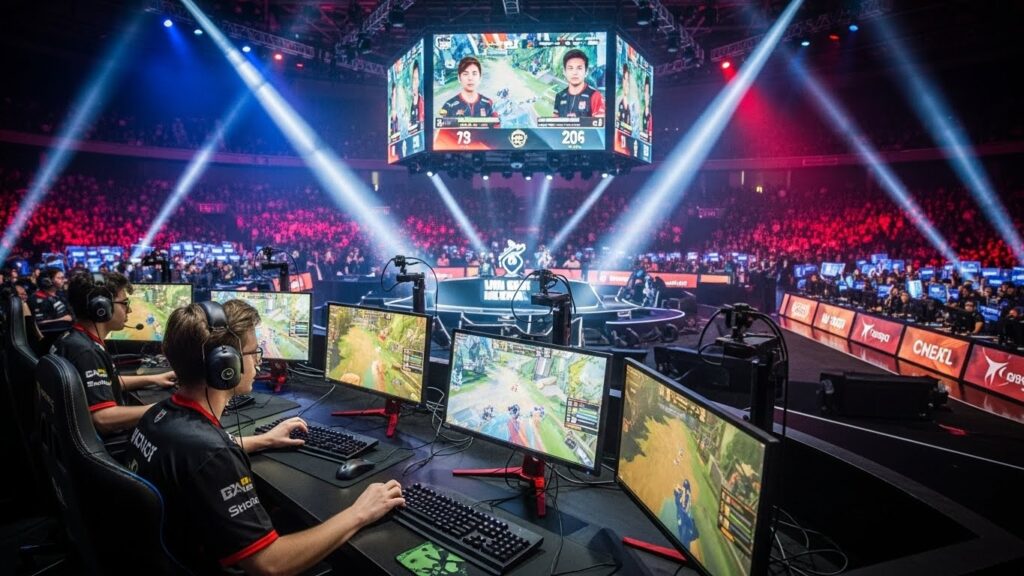

The Esports Boom: Understanding the Phenomenon and Its Global Impact
Esports, a term that was once foreign to many, has become a worldwide sensation, with millions of players, fans, and viewers. Whether you’ve heard of it through friends, social media, or your favorite streaming platform, esports is a force to be reckoned with. This rapidly growing industry, which revolves around competitive video gaming, has now become one of the most dynamic and lucrative sectors in the entertainment world. But what exactly is driving this surge, and what does it mean for the future of gaming, sports, and entertainment? Let’s take a deep dive into the world of esports.
What Exactly is Esports?
Esports, short for “electronic sports,” is a form of competition that involves professional players competing in video games, either individually or in teams. Unlike casual gaming, esports is organized, structured, and often involves tournaments with cash prizes, sponsorships, and global audiences. The games themselves can vary widely, but some of the most popular titles include “League of Legends,” “Dota 2,” “Counter-Strike: Global Offensive,” “Fortnite,” and “Overwatch.”
Esports has evolved from local, amateur competitions into massive global events, attracting sponsorships from some of the biggest companies in the world, from tech giants like Intel and NVIDIA to mainstream brands such as Coca-Cola and Adidas. The rise of esports has also given birth to a new form of entertainment, where professional players are treated as celebrities, often with large followings on social media platforms like Twitch and YouTube.
The Origins and Growth of Esports
The origins of esports can be traced back to the 1990s when competitive gaming started to gain traction. Early competitions, such as the “Red Annihilation” tournament in 1997, which featured the game “Quake,” and the “StarCraft” tournaments in South Korea in the early 2000s, laid the foundation for modern esports. These events were small by today’s standards, but they set the stage for the massive scale of esports competitions we see today.
In the 2000s, esports truly began to grow. South Korea played a pivotal role in the rise of competitive gaming, with “StarCraft” becoming a national obsession and the establishment of professional gaming leagues. The country became the epicenter of esports, with dedicated gaming channels, tournaments held in large arenas, and even government support for the industry.
The mainstream breakthrough came in the 2010s, when streaming platforms like Twitch made it possible for anyone, anywhere, to watch live esports events. As gaming became more accessible with the rise of internet connectivity, more and more players joined the competitive scene, and esports began to take on the structure of traditional sports.
Esports as a Global Industry
Today, esports is a billion-dollar industry. In 2021, the global esports market was valued at approximately $1.08 billion, and it is expected to keep growing, with projections reaching over $1.62 billion by 2024. This growth has been fueled by several factors:
-
The Rise of Streaming Platforms: Platforms like Twitch, YouTube Gaming, and Facebook Gaming have made it easier for fans to watch esports events live. The accessibility of these platforms has given esports a huge global audience.
-
Massive Sponsorships and Partnerships: Major brands like Coca-Cola, Nike, and Intel have recognized the potential of esports to reach younger, tech-savvy audiences, leading to multimillion-dollar sponsorships and partnerships.
-
Tournament Prizes and Salaries: As the prize pools for major esports tournaments continue to grow, esports players are able to earn a significant amount of money. For example, the prize pool for “The International,” a Dota 2 tournament, reached over $40 million in 2021, with the winning team taking home a substantial portion.
-
Mainstream Media Exposure: Esports is becoming more accepted in mainstream media. Networks like ESPN and Fox Sports are now broadcasting major esports events, further legitimizing the industry and drawing in more viewers.
-
Esports as a Career Path: What was once considered a hobby or a passion has now become a legitimate career choice. Professional esports players, coaches, analysts, and content creators have carved out niches within the industry. For talented players, gaming can be as lucrative as traditional sports, with sponsorships, prize money, and streaming revenues.
The Major Esports Games and Their Impact
There are dozens of esports games, but some titles stand out due to their massive followings, competitive scenes, and dedicated player bases. Let’s take a look at a few of the most influential and popular esports games.
League of Legends (LoL)
One of the most successful and well-established esports games is “League of Legends” by Riot Games. LoL has a global competitive scene, with regional leagues and annual tournaments like the League of Legends World Championship, which has drawn millions of viewers. LoL’s influence on esports is undeniable, as it introduced a new level of strategy and teamwork to competitive gaming. With its high-stakes tournaments and deep lore, it has attracted a dedicated fanbase and is one of the most watched esports games in the world.
Dota 2
Another titan in the esports world is “Dota 2,” developed by Valve. Dota 2 is known for its complexity and high skill ceiling. The game’s annual tournament, “The International,” has consistently had the largest prize pools in esports, with millions of dollars at stake for the winning team. The competitive scene for Dota 2 is fiercely intense, and the game is loved by fans for its strategic depth and unpredictable nature.
Counter-Strike: Global Offensive (CS:GO)
“Counter-Strike: Global Offensive” is one of the longest-running and most influential first-person shooters in esports. CS:GO has a thriving competitive community, with major tournaments like ESL Pro League and DreamHack Masters. The game’s fast-paced action and emphasis on teamwork and tactics have made it a favorite for both players and fans.
Fortnite
“Fortnite” has not only become one of the most popular games in the world, but it has also made a significant impact on the esports landscape. Epic Games, the developers of “Fortnite,” revolutionized the industry with the game’s competitive format, offering large prize pools and accessible tournaments. “Fortnite’s” cultural influence cannot be overstated, as it brought esports to a wider audience, especially among younger players.
Overwatch
“Overwatch” by Blizzard Entertainment has redefined competitive gaming in the world of first-person shooters. Its unique blend of teamwork, hero-based mechanics, and vibrant world has made it one of the standout games in the esports arena. The Overwatch League (OWL) has taken the structure of traditional sports leagues and applied it to esports, with city-based teams and a regular season format.
The Role of Fans and Community
One of the driving forces behind esports’ growth is its fanbase. Esports fans are passionate, dedicated, and highly engaged with the scene. They follow players, teams, and tournaments religiously, creating a vibrant community of like-minded individuals who bond over their love for competitive gaming.
Esports fans are also incredibly active on social media, sharing content, participating in discussions, and creating fan-driven content. Platforms like Reddit, Discord, and Twitter have become hubs for esports communities, where fans can interact with players, analysts, and other enthusiasts.
The fan experience is also enhanced through live events, where fans can watch their favorite teams compete in person. Large-scale esports events, like the League of Legends World Championship or The International, attract thousands of fans to arenas, with some tournaments even reaching the capacity of traditional sports venues. These events are not just about watching players compete; they are celebrations of gaming culture, with fan meetups, merchandise stalls, and immersive experiences.
The Future of Esports
As esports continues to expand, its influence is likely to grow even further. The line between traditional sports and esports is becoming increasingly blurred, with major sports networks broadcasting esports competitions, and esports venues being built alongside traditional stadiums. The Olympics has even shown interest in incorporating esports into its events, signaling the growing mainstream acceptance of competitive gaming.
Virtual reality (VR) and augmented reality (AR) technologies also hold the potential to change the way esports are experienced. With VR, players and fans could soon immerse themselves in virtual arenas, creating a more dynamic and interactive experience. As technology continues to evolve, esports may become even more integrated into our daily lives, providing new opportunities for players and fans alike.
Conclusion: Esports as a Cultural Phenomenon
Esports has come a long way from its humble beginnings in local LAN tournaments to becoming a billion-dollar industry with a global following. What began as a niche interest has now grown into a mainstream cultural phenomenon, with millions of people across the world tuning in to watch competitive gaming.
As the esports industry continues to mature, it will undoubtedly continue to shape the future of entertainment, sports, and even the way we connect with others through gaming. With an ever-expanding fan base, rising prize pools, and an increasing number of professional players, esports is poised to become an integral part of the global entertainment landscape for years to come.
In the end, esports is not just about gaming; it’s about a shared passion, a vibrant community, and a new era of entertainment that blurs the lines between virtual and reality. As this phenomenon continues to grow, the world of competitive gaming is only just getting started.