
The Evolution and Rise of Esports: From Hobby to Global Phenomenon
Introduction: A New Era of Competition
Over the past two decades, the world has witnessed a monumental transformation in how entertainment and competition are defined. Once considered merely a pastime for hobbyists and teenagers, video gaming has evolved into one of the most dynamic and influential industries in the modern era. At the heart of this transformation lies esports — a rapidly growing ecosystem where professional players, massive audiences, and global corporations converge in a digital arena. Esports, short for electronic sports, has grown from a niche subculture into a multi-billion-dollar industry, captivating millions of fans and changing how the world perceives competition and sport.
The concept of esports is simple yet revolutionary: competitive video gaming where players and teams face off in tournaments, leagues, and championships for glory, recognition, and often substantial prize money. But beyond the surface, esports represents much more than digital battles. It is a blend of skill, strategy, technology, teamwork, and passion that rivals traditional sports in both intensity and impact.
The Origins of Esports: Humble Beginnings
The story of esports begins long before streaming platforms, stadiums filled with cheering fans, or million-dollar sponsorships. The roots trace back to the early days of video gaming in the 1970s and 1980s, when arcade machines and home consoles were just beginning to capture the public’s imagination. The first recorded competitive gaming event took place in 1972 at Stanford University, where players competed in a game called Spacewar! for a modest prize of a year’s subscription to a magazine. Though small in scale, it symbolized a crucial moment — the birth of organized digital competition.
By the 1980s, arcade tournaments like Space Invaders Championships attracted thousands of participants, laying the groundwork for what was to come. The 1990s saw an explosion in PC gaming and early internet connectivity, enabling players to compete without being physically present in the same location. Titles such as Doom, Quake, and StarCraft gave rise to competitive gaming communities that organized local and online tournaments. These early events might seem primitive by today’s standards, but they cultivated the spirit of rivalry and innovation that continues to define esports.
The 2000s: The Dawn of the Esports Industry
The early 2000s marked a turning point for esports, transitioning from underground communities to a more structured and professional form of competition. Broadband internet became widely accessible, enabling smoother online gameplay and global matchmaking. Games like Counter-Strike, Warcraft III, and StarCraft: Brood War became foundational titles that fostered the first generation of professional gamers.
South Korea, in particular, played a pivotal role in legitimizing esports as a career. The country invested heavily in internet infrastructure and gaming culture, leading to the rise of televised esports matches and professional teams. StarCraft players became national celebrities, and esports arenas began to fill with thousands of spectators. Korea’s success inspired other regions to follow suit, demonstrating that video gaming could be more than just entertainment — it could be a sport.
During this decade, organizations such as Major League Gaming (MLG) in North America and the Electronic Sports World Cup (ESWC) in Europe began to formalize esports events. Sponsorships, team branding, and professional contracts started to emerge, setting the foundation for the global esports ecosystem we know today.
The Role of Technology and Streaming Platforms
The explosion of esports in the 2010s can be attributed to a perfect storm of technological innovation, social media growth, and the rise of live-streaming platforms. Services like Twitch and YouTube Gaming provided players and fans with direct access to competitive content, eliminating traditional barriers between professionals and their audiences. Suddenly, anyone with an internet connection could watch global tournaments live, interact with players, and even aspire to become a professional themselves.
Streaming didn’t just make esports more accessible — it made it personal. Fans could watch their favorite players practice, commentate, and share moments in real-time, creating a sense of intimacy and community. The ability to broadcast tournaments to millions of viewers without relying on traditional TV networks revolutionized the entire industry. This shift allowed esports to grow organically through fan engagement rather than corporate marketing alone.
Technological advancements in gaming hardware, graphics, and network performance also contributed to the growth. High-definition visuals, reduced latency, and powerful consoles and PCs provided smoother experiences for players and audiences alike. These developments elevated the viewing experience to a level comparable to mainstream sports broadcasts.
Esports Titles That Shaped the Industry
While hundreds of games have been featured in esports, a few have defined eras and set standards for competitive play. Each of these titles brought unique gameplay mechanics, communities, and narratives that contributed to the evolution of esports.
League of Legends revolutionized the multiplayer online battle arena (MOBA) genre with its team-based strategic gameplay. Since its release, it has hosted some of the biggest tournaments in history, including the League of Legends World Championship, which fills entire stadiums and attracts millions of online viewers.
Counter-Strike: Global Offensive continued the legacy of tactical shooters with precise gunplay and intense team coordination. Its longevity and skill ceiling make it a staple of esports competition.
Dota 2, another MOBA giant, became known for The International, an annual championship with record-breaking prize pools crowdfunded by its player community. This model of community-supported competition became a hallmark of modern esports funding.
Other titles such as Overwatch, Fortnite, Call of Duty, and Valorant have also contributed to the diversity of esports. Each game brings its own audience, style, and culture, creating a vibrant ecosystem that caters to different tastes and skills.
Professionalization: Teams, Leagues, and Sponsorships
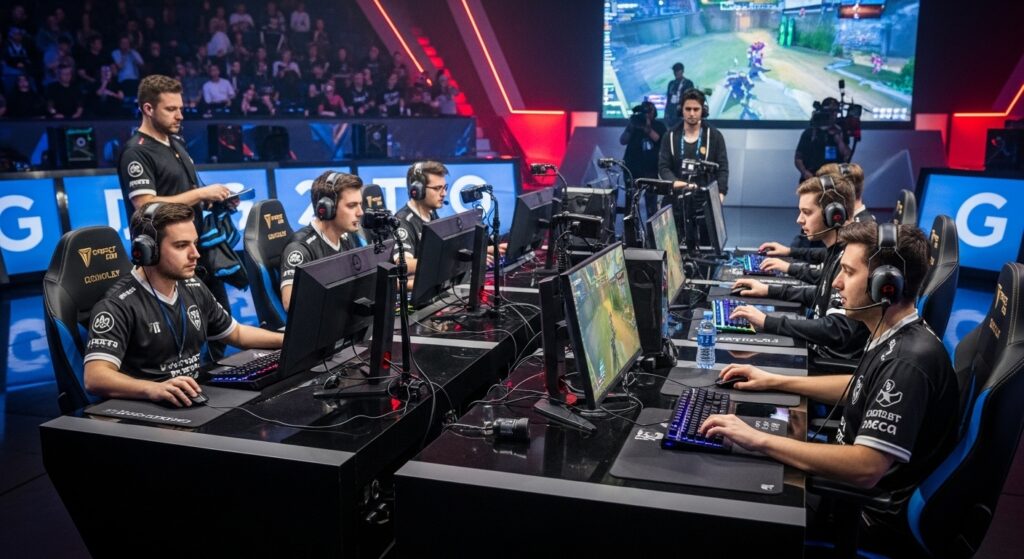
As esports matured, it began to mirror traditional sports structures in remarkable ways. Professional teams with full-time players, coaches, analysts, and support staff emerged across regions. Organizations such as Team Liquid, Fnatic, Cloud9, and T1 became household names within the gaming community. These teams operate much like football or basketball clubs, with training facilities, talent scouts, and brand partnerships.
Franchise leagues, such as the Overwatch League and the League of Legends Championship Series (LCS), introduced structured seasons, city-based teams, and standardized rules. This approach provided stability and legitimacy, attracting investors, advertisers, and even traditional sports franchises to the esports scene.
Sponsorships and partnerships became a critical component of esports economics. Tech giants, beverage companies, and luxury brands began investing heavily, seeing esports as a gateway to reach younger, tech-savvy audiences. The involvement of such corporations elevated esports from a niche interest to a mainstream entertainment sector.
Esports as a Career Path
What was once considered a hobby is now a viable career for thousands of players, coaches, commentators, and content creators worldwide. Professional gamers train rigorously, often practicing for 8 to 12 hours a day, analyzing gameplay footage, and maintaining physical fitness to perform at their best. The commitment and discipline required rival those of athletes in traditional sports.
Beyond the players themselves, esports has created entire ecosystems of employment opportunities. Commentators, known as casters, bring energy and storytelling to matches, while analysts and strategists work behind the scenes to refine team performance. Event organizers, production crews, marketers, and digital artists all contribute to the growing industry, making esports one of the most multifaceted entertainment sectors in the world.
Universities around the world have even begun offering scholarships and degree programs in esports management, game design, and competitive strategy. This academic recognition underscores the legitimacy and future potential of esports as a sustainable field.
Globalization and Cultural Impact
One of the defining features of esports is its global nature. Unlike many traditional sports that have regional dominance, esports transcends borders and languages. Tournaments often feature players from dozens of countries, creating an environment of cultural exchange and unity. The internet has made it possible for fans in different time zones to connect, discuss, and share their passion in real-time.
Countries such as South Korea, China, the United States, and Sweden have become powerhouses in various esports titles, but emerging regions like Southeast Asia, Latin America, and the Middle East are rapidly gaining prominence. The diversity of players and audiences has helped esports become one of the most inclusive forms of competition in modern history.
The cultural influence of esports extends beyond gaming. Esports athletes appear in mainstream media, fashion collaborations, and even music videos. The lines between gaming, pop culture, and entertainment continue to blur, creating a new hybrid culture that defines the digital generation.
The Economics of Esports
The financial growth of esports has been nothing short of extraordinary. The global esports market has surpassed billions in annual revenue, driven by sponsorships, media rights, merchandise sales, and ticketed events. Prize pools for major tournaments can reach tens of millions of dollars, rivaling some traditional sports championships.
Streaming platforms monetize through advertisements and subscriptions, while teams and players earn through brand deals, content creation, and fan support. Esports organizations are increasingly being valued at hundreds of millions, attracting venture capital and even traditional sports investors who see the long-term potential.
The pandemic of 2020 accelerated the digital transformation of entertainment, pushing esports further into the spotlight as live sports faced restrictions. Online tournaments and virtual events filled the gap, proving the resilience and adaptability of the esports model.
Challenges and Controversies
Despite its rapid rise, esports faces a number of challenges. One major issue is player burnout. The demanding schedules and pressure to perform at a high level often take a toll on mental and physical health. Unlike traditional sports, where athletes have unions and established support systems, esports is still developing its player welfare infrastructure.
Another concern is the lack of standardized global regulations. Each game publisher often controls its competitive ecosystem, which can lead to inconsistent rules, prize structures, and player treatment. Additionally, issues like cheating, match-fixing, and online toxicity occasionally tarnish the reputation of esports.
However, the industry is actively addressing these challenges. Player associations, mental health initiatives, and stricter tournament integrity measures are being implemented. As esports continues to evolve, its governance and professionalism are expected to mature accordingly.
The Future of Esports: A Digital Frontier
Looking ahead, esports shows no signs of slowing down. With advancements in virtual reality (VR), augmented reality (AR), and artificial intelligence (AI), the future of competitive gaming could be even more immersive and interactive. The line between player and spectator may blur further as audiences gain new ways to engage with live matches.
Educational institutions and governments are also recognizing esports as a legitimate sport, supporting infrastructure development and talent programs. As 5G and cloud gaming technologies expand accessibility, new players from developing regions will join the global stage.
The integration of esports with mainstream sports is another exciting development. Events such as the Asian Games have included esports as medal events, signaling a broader acceptance of digital competition in the global sporting landscape. The day when esports athletes stand alongside Olympians may not be far away.
Conclusion: The New Age of Competition
Esports is not just a trend or a subculture — it is a defining movement of the digital age. It represents the convergence of technology, creativity, and human ambition. From humble beginnings in college labs and arcades to sold-out arenas and millions of online viewers, esports has redefined what it means to compete, to entertain, and to connect.
In a world that increasingly values digital experiences and global connectivity, esports stands as a symbol of modern innovation. It unites people across continents, languages, and generations, proving that the spirit of competition knows no boundaries — not even the digital ones. The rise of esports is more than the story of gaming; it is the story of how humanity continues to evolve its definition of play, purpose, and passion.