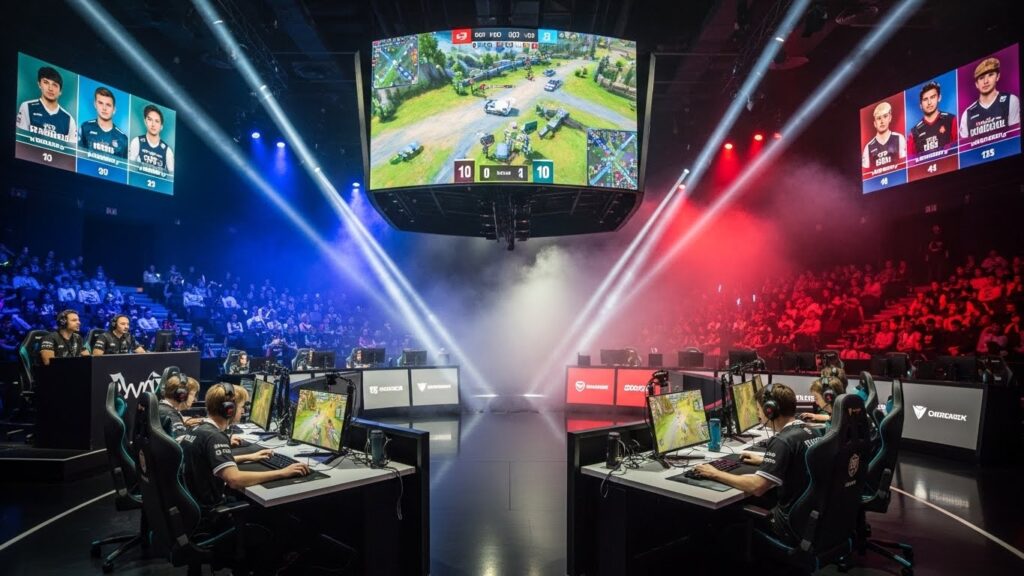

In recent years, eSports has shifted from a niche hobby to a booming global industry, capturing the attention of millions of fans worldwide. What began as a competitive pastime among gamers has now become a legitimate form of entertainment, with professional athletes, large-scale tournaments, and dedicated fanbases. But eSports isn’t just about playing video games; it’s about strategy, teamwork, and the incredible skill required to compete at the highest levels. In this blog post, we will explore the growth of eSports, its impact on the entertainment industry, and why it has become a major player in the world of sports and culture.
What is eSports?
At its core, eSports refers to organized, multiplayer video game competitions, often between professional players, teams, or organizations. These games range across various genres, from first-person shooters (FPS) like Counter-Strike and Overwatch, to multiplayer online battle arenas (MOBA) such as League of Legends and Dota 2, to real-time strategy games (RTS) like StarCraft II. Players or teams compete in tournaments for cash prizes, sponsorships, and worldwide recognition.
The rise of eSports can be attributed to the accessibility of the internet, streaming platforms like Twitch, and the evolution of gaming technology, which have allowed eSports to reach unprecedented levels of popularity. Today, it is a billion-dollar industry, and it continues to grow as both a sport and a form of entertainment.
The Rise of eSports: Key Factors Driving Growth
While competitive gaming has existed in some form for decades, the past ten years have seen eSports grow into a global phenomenon. Several key factors have contributed to its success and rapid expansion, including:
Streaming Platforms and Digital Accessibility
The emergence of streaming platforms like Twitch, YouTube Gaming, and Facebook Gaming has played a significant role in the growth of eSports. These platforms allow gamers to stream their gameplay live to audiences around the world. In fact, Twitch alone has millions of active users and boasts millions of hours watched annually. This digital accessibility has made it easier for fans to engage with the content, and the interactivity of these platforms helps build strong, engaged communities.
The ability to watch live matches, follow your favorite players, and interact with other fans in real-time has been crucial to the evolution of eSports. Fans can tune in from anywhere, making the world of competitive gaming accessible to a global audience.
Increased Sponsorship and Investment
Another major factor in the rise of eSports has been the influx of sponsorships and investment from both within and outside the gaming industry. Brands such as Coca-Cola, Intel, Nike, and Red Bull have invested heavily in eSports, sponsoring teams, tournaments, and events. These sponsorships have brought in significant revenue, allowing eSports organizations to expand and provide better resources for players and events.
Additionally, many venture capitalists and investors have seen the potential of eSports as a sustainable business, pouring millions of dollars into organizations, infrastructure, and talent development. As a result, eSports tournaments now offer prize pools that can rival those of traditional sports events, attracting top talent and establishing a thriving ecosystem.
The Professionalization of eSports
As eSports grew in popularity, it also became more professionalized. In the past, gamers competed for the love of the game, but as the industry matured, eSports players began to form professional teams with dedicated coaches, analysts, and support staff. These teams operate much like traditional sports organizations, with players signing contracts, receiving salaries, and competing in global tournaments.
Organizations like Team Liquid, Cloud9, and Fnatic are now household names in the eSports world, each with multiple games and players under their banner. The professionalization of eSports has also led to the creation of leagues and tournaments, with event organizers like ESL, DreamHack, and Riot Games putting together large-scale competitions that attract millions of viewers.
eSports as a Career Path
For many young people today, the dream of becoming a professional athlete has been replaced by the aspiration to be a professional gamer. eSports offers a legitimate career path for talented gamers, allowing them to make a living by competing in tournaments, streaming, and securing sponsorships.
Professional eSports players can earn substantial amounts of money from tournament winnings, sponsorships, streaming, and even merchandise sales. While the majority of professional gamers are still in their late teens or early twenties, the industry is starting to mature, with players now having longer careers, similar to those in traditional sports. Some of the biggest names in eSports have made millions, with players like Faker (League of Legends), s1mple (CS:GO), and N0tail (Dota 2) earning significant sums over their careers.
Beyond just competing, eSports players can also explore other career opportunities within the industry, such as coaching, analysis, content creation, and broadcasting. For example, former professional players often transition into analyst or commentator roles, providing insights and commentary during major tournaments. This multi-faceted career path has helped establish eSports as a legitimate industry and profession.
The Appeal of eSports: Why Fans Love It
The rapid growth of eSports can also be attributed to the passion and enthusiasm of its fanbase. Fans engage with eSports in a way that mirrors the dedication found in traditional sports. Here are a few reasons why eSports has garnered such a dedicated following:
Thrilling Competition
At its core, eSports is about competition, and like traditional sports, fans are drawn to the excitement and unpredictability of the games. Whether it’s a nail-biting League of Legends match or a high-stakes Dota 2 showdown, the intensity and drama of these games create a thrilling viewing experience. Spectators often find themselves emotionally invested in the outcomes of these matches, cheering for their favorite teams and players.
Community and Social Interaction
Another major draw of eSports is the sense of community. Fans of eSports often form tight-knit online communities where they can discuss strategies, share content, and follow their favorite players. Events like BlizzCon and The International also foster a sense of camaraderie, as fans from around the world come together to celebrate their shared passion for gaming.
eSports also facilitates social interaction through platforms like Discord and Twitch, where fans can interact with players, share tips, and discuss the latest happenings in the eSports world. This level of engagement fosters loyalty and builds long-term relationships between players and their fanbase.
Global Reach and Accessibility
One of the key factors contributing to the success of eSports is its global accessibility. Unlike traditional sports, where geographical location, stadiums, and live attendance can be limiting, eSports tournaments are available online for anyone with an internet connection. Fans from all over the world can tune in to watch their favorite players or teams, no matter where the tournament is taking place. This global accessibility has played a crucial role in the growth of eSports, breaking down the traditional barriers to entry found in many other forms of entertainment.
The Impact of eSports on Traditional Sports
As eSports continues to grow, it has begun to blur the lines between video games and traditional sports. The most obvious intersection is the creation of eSports leagues that mirror professional sports leagues, such as the NBA 2K League or the FIFA eWorld Cup. These leagues offer a new avenue for traditional sports teams to expand their reach, creating an entirely new competitive space for both digital and physical athletes.
Furthermore, traditional sports teams have recognized the value of eSports as a form of entertainment, and many have partnered with eSports organizations. For example, Paris Saint-Germain, a well-known football club, has its own eSports team that competes in various gaming titles. Major sports networks like ESPN and TBS have also begun broadcasting eSports tournaments, further legitimizing the industry and bringing it to a broader audience.
eSports and the Evolution of Sports Media
As eSports continues to grow, its influence on traditional sports media is undeniable. Networks like ESPN have created dedicated eSports channels, while websites like ESPN and Bleacher Report regularly cover eSports events. This crossover is part of a larger trend where video games and traditional sports are becoming increasingly intertwined, creating a hybrid sports culture where the lines between physical and digital competition are becoming increasingly blurred.
The Future of eSports
Looking ahead, the future of eSports looks incredibly bright. With advances in technology, increased investments, and a growing fanbase, eSports is poised for even greater success in the coming years. Here are a few key trends to watch:
Technological Innovations
The advancement of technology, such as virtual reality (VR) and augmented reality (AR), is likely to bring new, immersive experiences to eSports fans. Virtual reality gaming could revolutionize competitive gaming by allowing players and spectators to experience the game from a first-person perspective, making the experience even more exciting and engaging.
Increased Globalization
As eSports continues to grow globally, we will see more tournaments held in different parts of the world, as well as more players from diverse regions entering the professional scene. The rise of eSports in emerging markets like China, India, and Latin America will create new opportunities and expand the global eSports ecosystem.