
Introduction to Esports
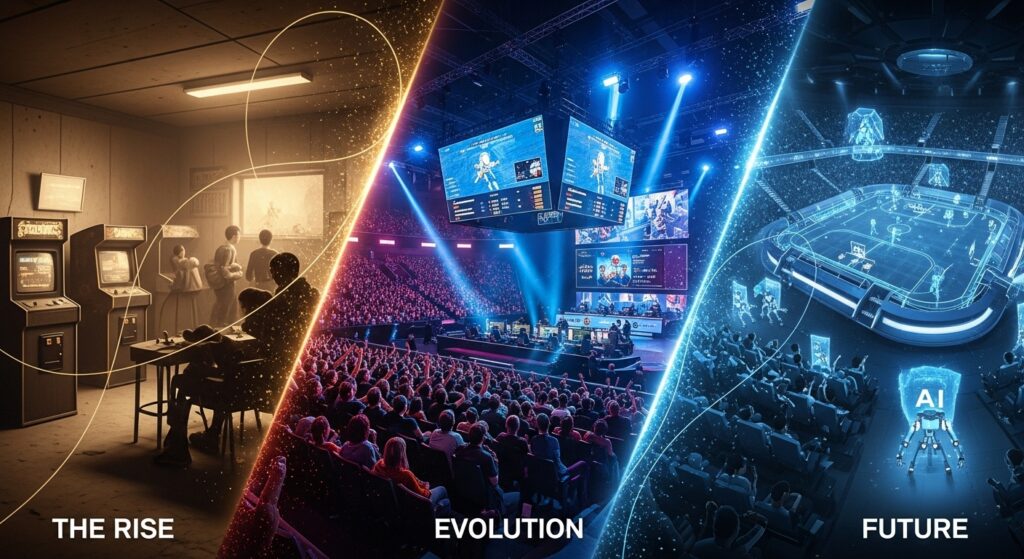
Esports, or electronic sports, refers to the world of competitive video gaming where professional players and teams face off in organized tournaments for glory, prizes, and global recognition. Over the last two decades, Esports has evolved from a niche subculture into a global phenomenon rivaling traditional sports in audience size, sponsorship revenue, and cultural influence. What began as small gaming meetups in the early 2000s has grown into stadium-filling spectacles streamed live to millions worldwide. Today, Esports sits at the crossroads of technology, entertainment, and sports, symbolizing how digital innovation has redefined competition in the 21st century.
The Early Days of Esports
The concept of Esports traces back to the late 1970s and 1980s when arcade and home console gaming first took off. One of the earliest competitive gaming events was the 1980 “Space Invaders Championship,” hosted by Atari, which attracted thousands of participants across the United States. During the 1990s, games like “Street Fighter,” “Quake,” and “StarCraft” began to develop dedicated communities that competed for prestige rather than profit. LAN parties and local tournaments became the heart of gaming culture, setting the foundation for modern Esports. However, it wasn’t until the rise of broadband internet and live streaming in the 2000s that Esports truly began its meteoric rise.
The Explosion of Competitive Gaming in the 2000s
The 2000s marked a pivotal decade for Esports. As internet connectivity improved, online multiplayer gaming became the norm, allowing players to compete globally from their homes. Titles like “Counter-Strike,” “Warcraft III,” and “Halo” emerged as competitive favorites. South Korea, in particular, became the epicenter of Esports, with “StarCraft: Brood War” achieving celebrity-level fame and television coverage. This era also saw the creation of the first major Esports leagues such as Major League Gaming (MLG) in North America and the World Cyber Games (WCG) globally. These leagues professionalized competitive gaming, offering structured tournaments, sponsorships, and prize pools that drew serious competitors.
Esports Becomes a Global Spectacle
By the 2010s, Esports had transformed from a subculture into a global entertainment industry. Games like “League of Legends,” “Dota 2,” and “Counter-Strike: Global Offensive” became household names among gamers and spectators alike. Riot Games’ “League of Legends World Championship” and Valve’s “The International” brought multimillion-dollar prize pools and stunning production values that rivaled major sporting events. The rise of streaming platforms, particularly Twitch and YouTube Gaming, provided fans direct access to live tournaments and player personalities. This accessibility played a crucial role in transforming Esports from a hobby into a spectator sport.
The Power of Streaming and Online Communities
Streaming technology revolutionized how fans engage with Esports. Unlike traditional sports, where spectators watch teams through broadcasters, Esports fans could now watch their favorite players live, chat with them in real-time, and even donate money to support them. Twitch, launched in 2011, became the central hub of this new ecosystem. It turned gamers into influencers and fans into communities. The personalities of players became as important as their skills. Viewers developed strong emotional attachments to their favorite streamers, teams, and games. This direct interaction bridged the gap between professional and casual gaming, giving rise to a new kind of celebrity — the Esports star.
Major Titles That Defined Esports
Several games have been instrumental in shaping the Esports landscape. Each brought unique gameplay mechanics, audiences, and competitive systems. “League of Legends” established a franchise-based system that mirrored traditional sports leagues. “Dota 2” set records with The International’s ever-growing prize pool, funded by players through in-game purchases. “Counter-Strike: Global Offensive” maintained Esports’ legacy of tactical shooters with its fast-paced, team-based play. “Fortnite” blended casual and competitive gaming, appealing to both kids and professionals. “Overwatch,” “Call of Duty,” “Rocket League,” and “Valorant” also contributed to Esports’ diversification, offering distinct styles and fan bases. These titles not only entertained but also set the blueprint for how modern competitive games are structured.
The Business of Esports
Esports is no longer just about fun or bragging rights — it’s big business. Global Esports revenue has reached billions of dollars annually, driven by sponsorships, media rights, merchandise, ticket sales, and advertising. Major brands such as Coca-Cola, Intel, Red Bull, and Nike have entered the industry, recognizing its power to reach younger, digital-native audiences. Teams operate as businesses with managers, coaches, and marketing divisions. Players sign contracts, negotiate salaries, and have fan followings rivaling those of athletes in football or basketball. Esports organizations like Team Liquid, Cloud9, and FaZe Clan have built global brands, expanding into content creation, fashion, and lifestyle ventures.
Esports Arenas and Live Events
Another sign of Esports’ legitimacy is the rise of dedicated arenas and large-scale live events. Tournaments now fill massive venues such as Madison Square Garden, the Staples Center, and the Mercedes-Benz Arena in Berlin. The spectacle of cheering crowds, booming soundtracks, and high-definition screens creates an electric atmosphere. Events like the “League of Legends World Championship Finals” attract millions of online viewers and thousands of live attendees. The blending of digital and physical experiences showcases how Esports has transcended the screen to become a global cultural event.
The Rise of Professional Esports Players
The life of a professional Esports player is one of discipline, strategy, and intense competition. Players train for long hours each day, analyzing game footage, refining strategies, and practicing mechanics to maintain peak performance. Just like athletes in traditional sports, they work with coaches, analysts, nutritionists, and even sports psychologists. The path to becoming a professional is demanding, but the rewards can be substantial — from six-figure salaries to sponsorship deals and streaming revenue. However, the career span of an Esports player is often shorter due to rapid changes in game meta and the physical and mental toll of constant competition.
The Role of Esports Organizations and Leagues
Esports leagues bring structure and sustainability to the competitive ecosystem. Franchised leagues like the Overwatch League and the Call of Duty League introduced city-based teams, regular seasons, and playoffs, mirroring the structure of traditional sports. Riot Games’ LCS and LEC, along with Valve’s Dota Pro Circuit, have also established stable competitive calendars and revenue-sharing models. These leagues ensure consistent competition, fan engagement, and long-term investment opportunities for organizations. Esports governance is still evolving, with different models emerging across games, but the industry continues to move toward greater professionalism and standardization.
Esports and Education
One of the most interesting developments in Esports is its integration into education. Many universities now offer Esports scholarships, degrees in Esports management, and even official varsity teams. Institutions recognize that Esports cultivates valuable skills such as teamwork, critical thinking, and digital literacy. Some schools use gaming as a way to engage students in STEM fields or media studies. Additionally, the Esports industry provides numerous career opportunities beyond playing — including event management, broadcasting, marketing, and software development. This educational recognition further legitimizes Esports as a professional and academic field.
Women in Esports
For many years, Esports was seen as a male-dominated industry, but women are increasingly making their mark as players, commentators, organizers, and executives. All-female tournaments and initiatives like “Women in Games” have helped create inclusive spaces where female talent can thrive. Players such as Sasha “Scarlett” Hostyn in StarCraft II and Li “Liooon” Xiaomeng in Hearthstone have broken barriers by winning major international tournaments. Esports’ digital nature offers opportunities to overcome traditional gender barriers, though challenges such as toxicity and representation still remain. The push for inclusivity continues to strengthen Esports’ image as a truly global and diverse platform.
The Influence of Esports on Traditional Sports
Traditional sports organizations have taken note of Esports’ rapid rise. Many professional sports teams now own or partner with Esports franchises. The NBA created the NBA 2K League, FIFA expanded its Esports World Cup, and Formula 1 launched virtual racing championships. These crossovers have bridged the gap between digital and physical competition. Esports’ integration into traditional sports demonstrates how the line between virtual and real athleticism is becoming increasingly blurred. Furthermore, Esports’ innovative approach to fan engagement and digital broadcasting has influenced how traditional sports market themselves to younger audiences.
The Cultural Impact of Esports
Esports is more than just a form of entertainment; it’s a cultural movement. It has influenced fashion, music, social media, and even language. Popular Esports figures collaborate with artists, brands, and film studios. The rise of gaming influencers and streamers has shifted the way celebrities are made. Esports events are often accompanied by music performances and pop-culture collaborations, making them multimedia spectacles. The global nature of gaming communities also fosters cross-cultural exchange, connecting fans from every corner of the world. In many ways, Esports represents the globalization of youth culture in the digital age.
Challenges Facing the Esports Industry
Despite its explosive growth, Esports faces several challenges. Player burnout, inconsistent regulations, and game lifespan limitations create instability. Unlike traditional sports governed by independent bodies, Esports depends on game developers, who control competitive rules, formats, and even monetization. This centralized power structure can create conflicts between developers and organizations. Issues such as cheating, match-fixing, and online harassment also threaten integrity. Additionally, while viewership is massive, monetization still trails behind traditional sports. The industry continues to search for sustainable revenue models that balance player welfare, fan experience, and profitability.
Esports and Technological Innovation
Esports thrives at the cutting edge of technology. From advanced gaming hardware to high-speed streaming, innovation fuels every aspect of the industry. Virtual reality (VR) and augmented reality (AR) promise to transform how games are played and viewed, while artificial intelligence (AI) tools assist in strategy development and performance analysis. Blockchain and NFTs have also entered the conversation, offering new ways to manage in-game assets and fan engagement. The synergy between technology and Esports ensures that the industry remains dynamic and adaptable, always pushing the limits of what digital entertainment can achieve.
The Future of Esports
The future of Esports looks incredibly promising. Analysts predict continued growth in audience size, sponsorship investment, and mainstream integration. Esports is on track to be included in major multi-sport events such as the Olympics, a testament to its cultural legitimacy. As games evolve and technology advances, new genres and platforms will emerge, keeping the industry fresh and exciting. The next frontier may include mobile Esports, virtual tournaments, and mixed-reality competitions. With younger generations growing up as digital natives, Esports will remain a central part of global entertainment for decades to come.
Conclusion
Esports represents a remarkable shift in how humanity defines sports, competition, and community. What once began as friends gathering around consoles has become a billion-dollar industry connecting millions across the globe. It combines skill, technology, storytelling, and creativity in ways that traditional sports cannot. As it continues to grow, Esports will not only entertain but also shape the future of media, education, and global culture. The digital arena has become a new world stage, where passion and performance converge — and this is only the beginning of its story.