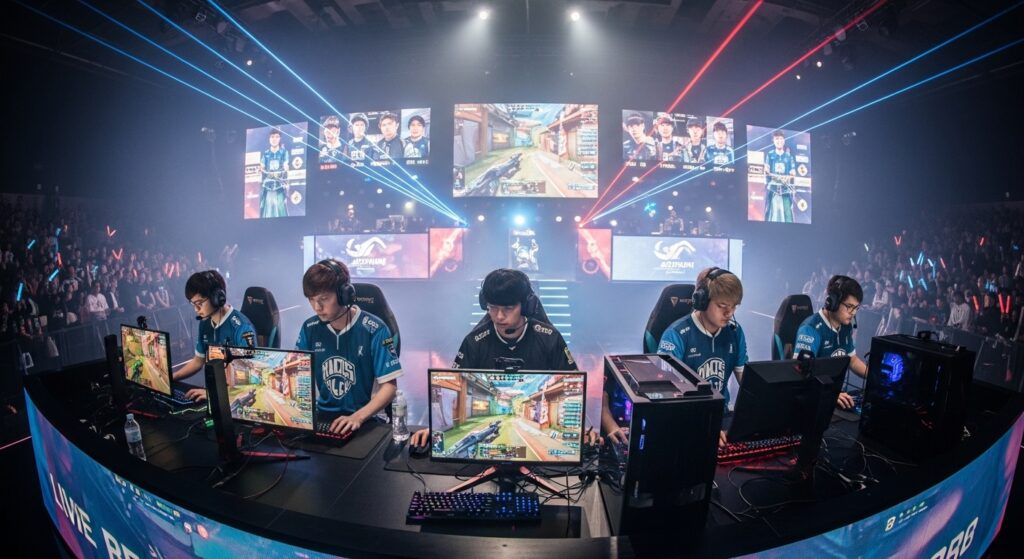

The Rise of Esports: From Hobby to Global Phenomenon
Introduction
In the past two decades, the world has witnessed a digital revolution that has transformed how people play, compete, and interact with games. What was once dismissed as a simple pastime for teenagers sitting in dark rooms has evolved into one of the most dynamic entertainment industries on the planet—esports. This competitive gaming world is now a billion-dollar industry that rivals traditional sports in viewership, sponsorship, and global influence.
Esports is more than just playing video games; it’s an ecosystem of competition, strategy, technology, and culture. It bridges the gap between players and fans, between passion and profession, and between entertainment and business. From small local tournaments to global championships held in massive arenas, esports has become an undeniable force shaping the future of entertainment.
The Origins of Esports
The idea of competitive gaming didn’t start recently. The roots of esports date back to the early 1970s when the first recorded video game competition took place at Stanford University. The game was “Spacewar,” and the prize was a year’s subscription to a magazine. Though humble, this event planted a seed that would grow over decades into an international movement.
During the 1980s, arcade gaming became the dominant form of entertainment among young people. Games like Pac-Man, Donkey Kong, and Space Invaders became cultural icons, and players started competing for high scores. The first televised gaming event, organized by Atari in 1980 for “Space Invaders,” attracted over 10,000 participants, signaling that gaming had a serious competitive side.
However, the real transformation began in the 1990s with the rise of personal computers and local area networks. Titles like “Doom,” “Quake,” and “StarCraft” gave rise to multiplayer competition. By the late 1990s and early 2000s, organized tournaments started appearing across the world. South Korea, in particular, became a hotbed of esports, with dedicated television channels broadcasting “StarCraft” matches and players becoming national celebrities.
The Technological Revolution Behind Esports
Technology played the most critical role in the explosion of esports. The advancement of high-speed internet allowed players from different continents to compete in real-time. Streaming platforms gave rise to new forms of audience engagement, making it possible for millions of fans to watch live matches from anywhere in the world.
The introduction of platforms like Twitch and YouTube Gaming changed everything. For the first time, gamers were not just playing—they were performing. Streaming transformed gaming into a spectator sport, and professional players became influencers with millions of followers. High-definition graphics, advanced gaming hardware, and faster processors also made esports more immersive and competitive.
Game developers began to recognize this shift. They started designing games with built-in esports potential. Titles such as “League of Legends,” “Dota 2,” “Counter-Strike: Global Offensive,” “Overwatch,” and “Valorant” became cornerstones of competitive gaming. Each offered unique mechanics, strategic depth, and community-driven support that fueled professional play.
The Globalization of Esports
Esports transcends borders in a way few industries can. It is a truly global activity where players from any country can compete and achieve fame. South Korea, China, the United States, and several European nations have become central hubs for esports activity, but the movement has spread to regions like Southeast Asia, the Middle East, and South America as well.
Large-scale events such as The International (Dota 2), the League of Legends World Championship, and the Fortnite World Cup attract millions of viewers and prize pools that often surpass those of many traditional sports tournaments. The 2019 Fortnite World Cup awarded a total of $30 million in prizes, making it one of the most lucrative competitions in history.
Esports also broke cultural barriers. Players speak different languages, live in different time zones, and represent diverse backgrounds—but their passion for gaming unites them. The sense of community and belonging among fans and players has turned esports into a global cultural movement.
The Business of Esports
Behind every successful esports event is a complex business ecosystem. Sponsorships, advertising, merchandising, broadcasting rights, and ticket sales form the backbone of esports revenue. Major brands such as Intel, Coca-Cola, Red Bull, and BMW have invested heavily in esports, recognizing the marketing potential of reaching younger, tech-savvy audiences.
Esports organizations now operate like traditional sports teams, complete with managers, coaches, analysts, and marketing departments. Players sign contracts, receive salaries, and even share in prize winnings. Many top-tier professionals earn six or seven-figure incomes annually through tournament winnings, streaming, sponsorships, and endorsements.
Moreover, esports has become a significant source of content for media networks. Broadcast deals with major television and streaming platforms have helped legitimize esports in the eyes of mainstream audiences. Universities have even begun offering scholarships and degree programs related to esports management, broadcasting, and game development.
The Life of a Professional Esports Player
Becoming a professional esports athlete requires far more than talent—it demands discipline, strategy, and mental strength. Players train for hours daily, mastering game mechanics, developing reflexes, and studying their opponents’ strategies. Teams often live together in “gaming houses,” where they practice under the guidance of coaches and performance analysts.
A typical day for a pro gamer might include six to ten hours of practice, physical exercise to maintain stamina, team meetings, and scrimmages against other teams. Mental health has become an essential focus area as the pressures of competition, performance expectations, and burnout are real challenges in the esports world.
Unlike traditional sports, the career span of a professional gamer is often shorter. Reaction times peak in early adulthood, meaning many players retire before age thirty. However, retirement in esports doesn’t always mean leaving the industry—many go on to become coaches, streamers, analysts, or content creators, continuing to influence the scene long after their competitive careers end.
Esports and Education
Esports has also made its way into education. Schools and universities worldwide have begun incorporating esports programs to teach teamwork, communication, leadership, and critical thinking. Competitive gaming fosters skills that are valuable in modern careers, such as problem-solving, collaboration, and adaptability.
Some universities in the United States, South Korea, and Europe now offer esports scholarships similar to those for traditional athletes. This formal recognition has helped esports gain legitimacy and has encouraged parents and educators to see gaming not as a distraction but as a potential career path.
The Role of Streaming and Content Creation
Streaming is one of the most powerful forces driving the esports industry. Platforms such as Twitch, Kick, and YouTube Gaming have turned individual players into global celebrities. Streamers not only play games but also entertain, educate, and connect with audiences on a personal level.
The symbiotic relationship between esports and streaming has been key to the industry’s growth. Professional matches attract millions of live viewers, while highlight clips, reaction videos, and analysis content continue to engage audiences long after the tournaments end. Fans feel closer to their favorite players than ever before, creating a sense of loyalty and connection unique to esports.
This shift has also opened opportunities for non-professional gamers to build careers as content creators. Many streamers earn substantial income through donations, subscriptions, sponsorships, and advertising revenue. The digital nature of the industry means anyone with skill, personality, and dedication can find success.
The Social and Cultural Impact of Esports
Esports has not only reshaped entertainment—it has influenced culture itself. It promotes diversity, inclusivity, and global connectivity. Unlike traditional sports that often require expensive facilities or equipment, esports is accessible to anyone with a computer or console and an internet connection. This accessibility has allowed millions of people to participate, watch, and compete regardless of background or gender.
Esports has also become a tool for social interaction. Online communities, tournaments, and fan clubs foster friendships and collaboration across borders. Events like DreamHack and Gamescom bring together thousands of gamers in physical spaces, celebrating the shared passion for digital competition.
Moreover, esports has influenced fashion, music, and lifestyle. Collaborations between gaming companies and clothing brands have resulted in unique apparel lines. Artists have performed at major esports events, and even traditional sports teams have created esports divisions to tap into younger audiences.
Challenges Facing the Esports Industry
Despite its rapid rise, esports faces several challenges that could shape its future. One major issue is player burnout, caused by intense training schedules and constant competition. Mental health awareness is improving, but more support structures are needed.
Another concern is sustainability. While top games enjoy massive popularity, many esports titles fade as player bases decline. Maintaining long-term engagement requires constant innovation from developers and organizers.
Cheating and match-fixing also pose threats. Because esports is digital, the temptation to manipulate outcomes using unauthorized software or exploits can be high. Regulatory bodies are working to establish fair play standards and strict penalties for violations.
Lastly, there’s the issue of representation and inclusivity. While esports is theoretically open to everyone, women and minority groups remain underrepresented at the professional level. Initiatives are underway to encourage broader participation and create safer, more inclusive environments for all players.
Esports and the Future of Entertainment
Esports has redefined what it means to be an athlete, a fan, and a competitor. The line between virtual and physical sports continues to blur, with technology such as virtual reality and augmented reality promising to revolutionize how people experience competitive gaming.
As esports continues to grow, it is increasingly merging with mainstream entertainment. Collaborations between esports organizations and movie studios, musicians, and celebrities are common. Events are now produced with the same cinematic flair as major sporting spectacles, complete with live audiences, pyrotechnics, and elaborate stage designs.
Looking ahead, the integration of artificial intelligence, blockchain technology, and immersive viewing experiences may take esports to new heights. AI-driven analytics are already being used to improve team strategies, while blockchain-based systems could enhance transparency in prize distribution and player contracts.
Esports as a Career Path
For young people today, esports represents more than just an entertainment option—it’s a potential career. Opportunities extend far beyond professional play. Roles such as game caster, event manager, coach, journalist, analyst, developer, and marketer all exist within the esports ecosystem.
The industry’s demand for skilled professionals in marketing, content creation, production, and technology continues to rise. Universities offering esports-related courses are preparing the next generation to thrive in this evolving landscape.
Conclusion
Esports has come a long way from the days of small LAN parties and arcade tournaments. It has grown into a powerful cultural and economic force that commands global attention. Its combination of competition, technology, and entertainment has reshaped how people perceive gaming, turning it from a niche hobby into a mainstream phenomenon.
The journey of esports reflects the broader story of our digital age—a story of connection, innovation, and limitless potential. As technology continues to evolve, so too will the boundaries of esports. One thing is certain: competitive gaming is not a passing trend. It is a new form of sport, art, and community that will continue to inspire generations to come.
Esports is not just the future of gaming—it is the future of entertainment itself.